What is the maximum cruising range of Wuling Hongguang MINIEV?

The cruising range of Wuling Hongguang MINIEV is between 170km and 120km.

In actual use, especially in cold winter, the owner will find that the cruising range of the vehicle has decreased. For example, when driving in the morning, it may be found that the cruising range of the vehicle will be reduced by more than six kilometers after driving for two kilometers, which indicates that the cruising performance of the vehicle will be affected to some extent in winter.

Wuling Hongguang MINIEV is equipped with a rear motor and adopts rear wheel drive mode. This motor has a maximum power of 20 kW and a maximum torque of 85 Nm, which provides sufficient power support.

This model uses a lithium-ion battery, which has light weight and high energy density, and is helpful to improve the cruising range and dynamic performance of the vehicle. The front suspension of Wuling Hongguang MINIEV adopts McPherson independent suspension, while the rear suspension adopts multi-link independent suspension, which provides good handling and ride comfort for the vehicle.

五菱宏光MINIEV

To sum up, the cruising range of Wuling Hongguang MINIEV may decrease in winter, but it is still an economical electric vehicle that is very suitable for commuting in cities.

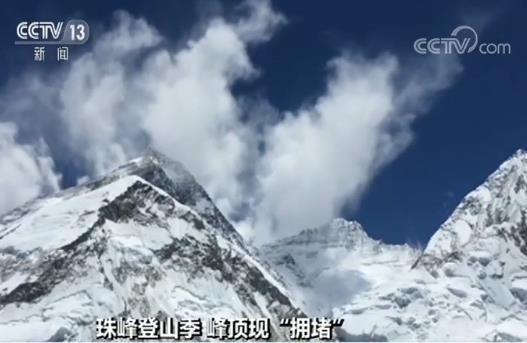
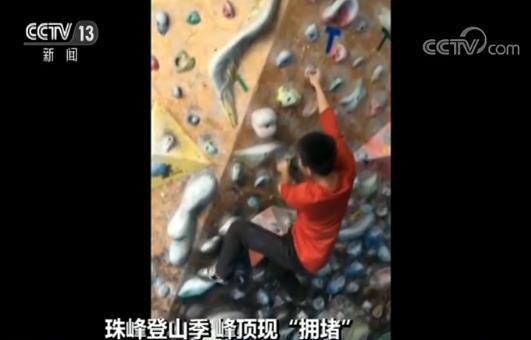
The top of Mount Everest is now "congested". 14 people died. The witnesses told more details about the incident.

CCTV News:Two days ago (May 31st), the government of Xizang Autonomous Region released data. In the 2019 Everest climbing season, there were 241 people on the north slope of Mount Everest in China. Compared with the northern slope of Mount Everest, the southern slope of Mount Everest in Nepal is more commercialized, and even becomes the "online celebrity" punching place for climbers. During the best climbing window, there is congestion at the summit. However, dangers also follow.
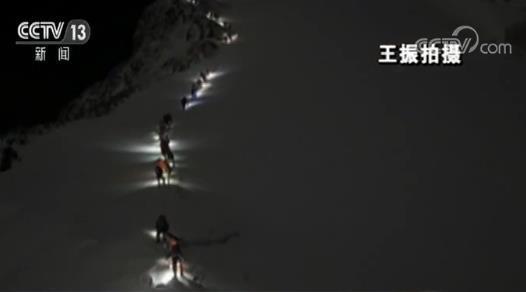
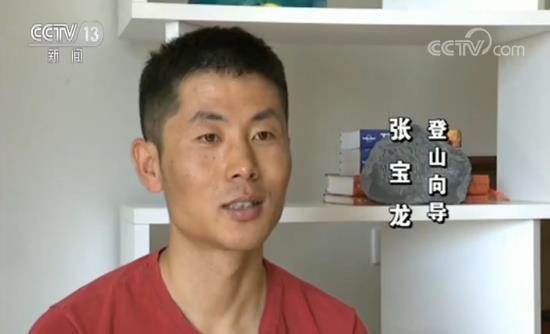
Zhang Baolong: "Starting at night, there may be a 400-meter head lamp connected together. I thought there were really many people this year."
This is Zhang Baolong’s third time to climb Mount Everest. As a guide, he will take his clients to climb it for eight or nine hours in the dark with controllable weather, and plan to climb to the top at dawn. Due to the weather change, the number of suitable climbing days on the south slope of Mount Everest decreased this spring, and dozens of teams concentrated on the summit. A Nepalese climber walking in the team in front of Zhang Baolong took this photo of madness on social platforms on the south side of Mount Everest. Between the south peak and the peak, there is a short step, which is where the big congestion occurred this year.
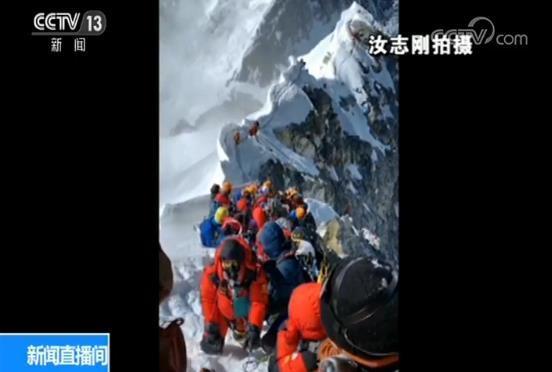
This short step, called Hillary Step, is the last pass of Mount Everest. Although it is only about ten meters, because it is rock, shoes are difficult to grasp, so everyone is cautious, and the subsequent rushing team has to cling to the snow eaves on the right side, while the cliff is on the left. It is estimated that each of the 381 climbers who have obtained the mountaineering license will employ at least one guide, and the number of climbers will be as high as 1,000.
Guide Zhang Baolong: "At that time, I heard that there was a traffic jam on the top of the mountain. I thought it was broken at that time. The people who came up were anxious, and the people who came down were anxious. Everyone was trying to move forward and didn’t leave a seat for anyone."
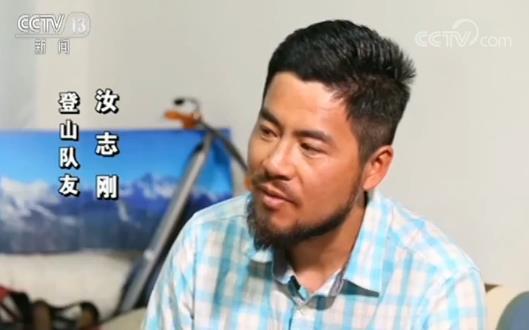
Climbing teammate Ru Zhigang: "When we set out from camp C4, I told my guide that we had to rush to the top today, but the problem is that if there is traffic jam, it means that you are just there consuming oxygen and people are not leaving, so it is very dangerous."
The "dead zone" above 8000 meters is extremely cold and anoxic. Due to the long waiting time of three hours and excessive physical exertion, 14 people were killed and 3 people were missing in this heavy traffic jam, and the China team represented by Zhang Baolong successfully reached the summit without any casualties. After reaching the summit, most people can consume more than half. Those who are not excited must descend to a safe place before the weather habitually deteriorates in the afternoon, but they will encounter congestion again when descending.
Zhang Baolong: "When we came down from the altitude of 8,600, someone behind us was calling for help. At that time, my client said that you would go up to save him. He said that if you don’t save him, I won’t leave. I was very angry at that time. I exploded at that time. I said that if no one from their own team came to save him, who would help you?"
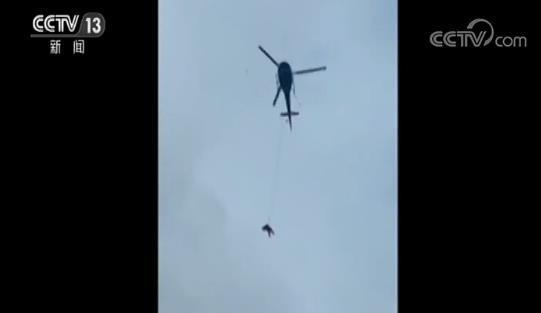
Zhang Baolong is not an alarmist. In addition to uncontrollable natural risks, extreme environment and long-term congestion, even with sufficient oxygen, human functions may collapse at any time under a high load of 8 kg to 25 kg. Teammate Ru Zhigang captured a helicopter transporting patients, but not everyone was lucky enough to get such assistance, and he was almost hit by a climber who fell down.
Climbing teammate Ru Zhigang: "The Indian girl in the video, with a bang, rolled down. Later, her two guides pulled her. Although she said that she did, she was unconscious. A Nepalese friend of mine told me that she had passed away."
Strengthen qualification examination, respect dreams and do what you can.
Climbing Mount Everest has become a trend, but in the eyes of professionals, not everyone is suitable for climbing Mount Everest. According to statistics, more than a dozen climbers have been killed this year. Compared with China’s cautious control of climbing the peak on the northern slope, the southern slope under Nepalese jurisdiction is more commercialized. As long as you can pay 300,000-400,000 RMB for mountaineering, you can get a mountaineering permit on the south slope with or without mountaineering experience. And this also brings security risks.
Zhang Baolong: "It’s too tempting to be 200 meters short of the summit. There is a tip of $1,500 or more for the summit."
Money can buy nanny service, but it is not absolutely safe. A guide from China like Zhang Baolong conducts field training all the year round and strictly controls his diet. If customers ask him to help them climb Mount Everest, they need at least one and a half years of intensive training under his guidance. This is his optional action, and also in response to China’s "5678 system".
Zhang Baolong: "Since climbing Mount Everest on the northern slope of China in the 1960s, everyone has been trying to promote mountaineering with experience. Climbing must be 5,000 meters, 6,000 meters, 7,000 meters and 8,000 meters. Therefore, the vast majority of mountain climbers in China are relatively trained. In any case, they have to climb three mountains at least before going to Mount Everest. "
Relevant persons said that the mountaineering management department has limited and reviewed the age and mountaineering experience of Everest climbers, which not only respects dreams, but also appeals to people to do what they can.
Reporting/feedback

Beijing Traffic Management Bureau: It is recommended to work flexibly and travel in the wrong peak next week.

On the morning and evening after the holiday, the traffic pressure on the ring roads, tie lines and some nodes in the bridge area is high, and the traffic pressure on the first working day after the holiday (February 7) is outstanding. Please yield to the Winter Olympics lane, and it is recommended to avoid the ring roads and expressways in the western and northern urban areas at the right time. Short-term traffic around some hospitals is concentrated; Ice and snow sports venues are always hot spots for travel; Some parks and winter Olympics landscapes are still attractive factors for post-holiday traffic; After the holiday, the traffic volume at the passenger station increased. The traffic control department releases the traffic forecast for next week based on the traffic operation and data analysis in recent years.

First, the traffic forecast on the working day after the holiday

(1) The traffic pressure on the ring road and tie line is still relatively high during the morning and evening peak hours of post-holiday working days.

The morning and evening peaks of post-holiday working days are expected to be the second, third and fourth ring roads, the east, west and north fifth rings, the east sixth ring road, the urban roads such as Caihuying South Road, Jianwai Street, Tonghuihe North Road, Xizhimen North Street, Wanquanhe Road, Lianshi East Road and Lianhuachi West Road, and the expressways and expressways such as Jingcheng Expressway, Beijing-Tibet Expressway, Airport Expressway, Lianshi Road and Jingtong Expressway.

In particular, it needs to be reminded that February 7th is the first working day after the Spring Festival holiday, with the tail numbers 4 and 9 restricted, and it is also the first time that the Winter Olympics competition day coincides with the working day. Many competitions will be held in the National Aquatics Center, the Capital Gymnasium, the Shougang Ski Jumping Platform, the Wukesong Sports Center, the National Speed Skating Hall and the National Gymnasium, with the Jianting Bridge on the North Fifth Ring Road to the Olin West Bridge in both directions, the outer ring of the west section of the North Second Ring Road and the direction of Fushi Road to Beijing. The traffic pressure on the roads with Olympic lanes in the direction of the airport expressway entering Beijing will be more prominent. The traffic control department will take temporary traffic management measures for some roads around the venue according to the traffic conditions. It is recommended that you pay attention to the event arrangement and real-time traffic information, work flexibly and travel at different peaks.

(2) Some ski resorts are always hot spots for travel.

Since winter, the heat of snow and ice sports has been high continuously, and the passenger flow and vehicle flow to ski resorts such as Nanshan, Huaibei, Jundushan, Yuyang and yunfo mountain are large, and the traffic of surrounding roads is also affected to some extent. It is estimated that the traffic volume to Nanshan, Huaibei, Jundushan, Yuyang and other ski resorts will be large on weekdays and weekends, and the traffic of surrounding roads will also be affected to some extent. The Beijing-Tibet, Jingxin, Jingcheng, Daguang and Jingping expressways connecting the urban areas and the Sixth Ring Road may have short-term traffic concentration.

Remind citizens and friends who participate in ice and snow sports and leisure: some rivers and lakes ice rinks have been closed. Please check the opening situation of the venue and the epidemic prevention and control measures before going out. It is suggested to stagger the travel peak to avoid the troubles of waiting in line, finding parking spaces and even making a trip in vain. The traffic conditions around most ski resorts are limited, so please pass in order when vehicles queue up, and don’t borrow the opposite lane to overtake.

(3) After the holiday, the traffic volume of passenger stations increased.

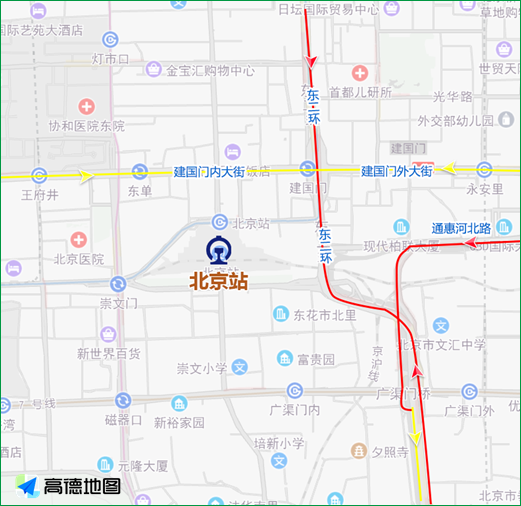
Judging from the situation in previous years, during the week after the Spring Festival holiday, passenger stations such as Beijing Railway Station, Beijing West Railway Station, Beijing South Railway Station, Beijing North Railway Station, Beijing Chaoyang Railway Station, Qinghe Railway Station, Capital Airport and Daxing Airport will usher in a peak passenger flow. Recently, the high-speed traffic at the airport is under great pressure. Citizens returning from the airport suggest checking the real-time road conditions and trying to take the airport express train back to the urban area.

(4) Short-term traffic around some hospitals is concentrated on weekdays.

At the end of the holiday, some hospitals will also usher in the peak of medical treatment, and the traffic will be concentrated on the roads and bridge nodes around the Third Hospital of Beijing Medical University, Children’s Hospital, Children’s Research Institute, Beijing Hospital, Tongren Hospital and other hospitals, with the peak period of 7-mdash; 11: 00 and 13— At 1600 hours. The queue of vehicles in front of the Third Hospital of Beijing Medical University affects the east-west traffic of Huayuan North Road. It is recommended to check the real-time road conditions before traveling and try to avoid the slow roads around the hospital.

(5) Some parks and winter Olympics landscapes are still the attraction factors for post-holiday traffic.

At the end of the holiday, citizens’ friends’ enthusiasm for traveling and punching cards has not diminished. It is expected that Tiananmen Square — Qianmen Pedestrian Street, Zoo, Yuanmingyuan, Summer Palace, Universal Resort, Happy Valley, Gubei Water Town, Shijingshan Stadium and World Park are still popular destinations for post-holiday travel. The winter Olympic theme flower beds arranged in Dongdan, Xidan and Beitucheng subway stations are also areas where citizens and friends take photos and punch cards, and there will be short-term traffic concentration on the surrounding roads.

Second, travel and safety tips

(1) Travel safety tips for the Winter Olympics. Entering the peak of the Winter Olympics, the use of the Olympic lanes will also reach a peak. It is suggested that citizens pay attention to the arrangement of the events, reduce travel and green travel, and give courtesy to the vehicles in the Winter Olympics when driving, fully demonstrating the hospitality and civilized and courteous host style of the "Double Olympics City". I also remind you once again that if there is a bus lane on the road where the Olympic lane is set, motor vehicles can borrow the bus lane during the use period of the Olympic lane.

(2) It is suggested to stagger the peak of commuting in urban areas. In the morning and evening of winter, the traffic of each loop and tie line in the peak city is concentrated, the nodes in the bridge area drive slowly, and the traffic pressure continues to be high. Please pay attention to the real-time traffic information released by Beijing traffic police through official Weibo and radio before traveling. Avoid the roads such as the Fourth Ring Road, the Fifth Ring Road, the Jingli Expressway, the Beijing-Tibet Expressway and the Airport Expressway in the western and northern urban areas during rush hours. It is recommended to travel at least half an hour in advance or later, and take personal health protection when commuting by public transport such as subway.

(3) Please check the vehicle before driving. After the festival, you should pay attention to the state of the vehicle before driving, maintain it in time, and check the antifreeze, glass water, lighting and other conditions. Especially when driving electric vehicles, we should pay attention to the cruising range in time.

In addition, remind everyone to go to crowded places as little as possible, scan the code and measure the temperature according to regulations, and do a good job in personal health protection. Before skiing and traveling, please check the information about the opening of ski resorts and park scenic spots and the prevention and control measures, and make an appointment as required. You can choose peak-shifting entertainment on weekdays.

(CCTV reporter Zhao Xuerong)

The "hot" words of the meeting from October to December: Silk Road, Dunhuang, Digital Humanities

Time: November 30-December 1, 2019

Organizers: School of History, Nankai University, Editorial Department of War of Resistance against Japanese Aggression Studies, War of Resistance against Japanese Aggression Memorial Network.

Theme: Zhang Taiyan and His Times

Time: November 30-December 1, 2019

Organizers: China Modern Culture Society, Institute of Modern History of China Academy of Social Sciences, Zhejiang Republic History Research Center of Hangzhou Normal University, Memorial Hall of Zhang Taiyan’s Former Residence in Yuhang District, Hangzhou.

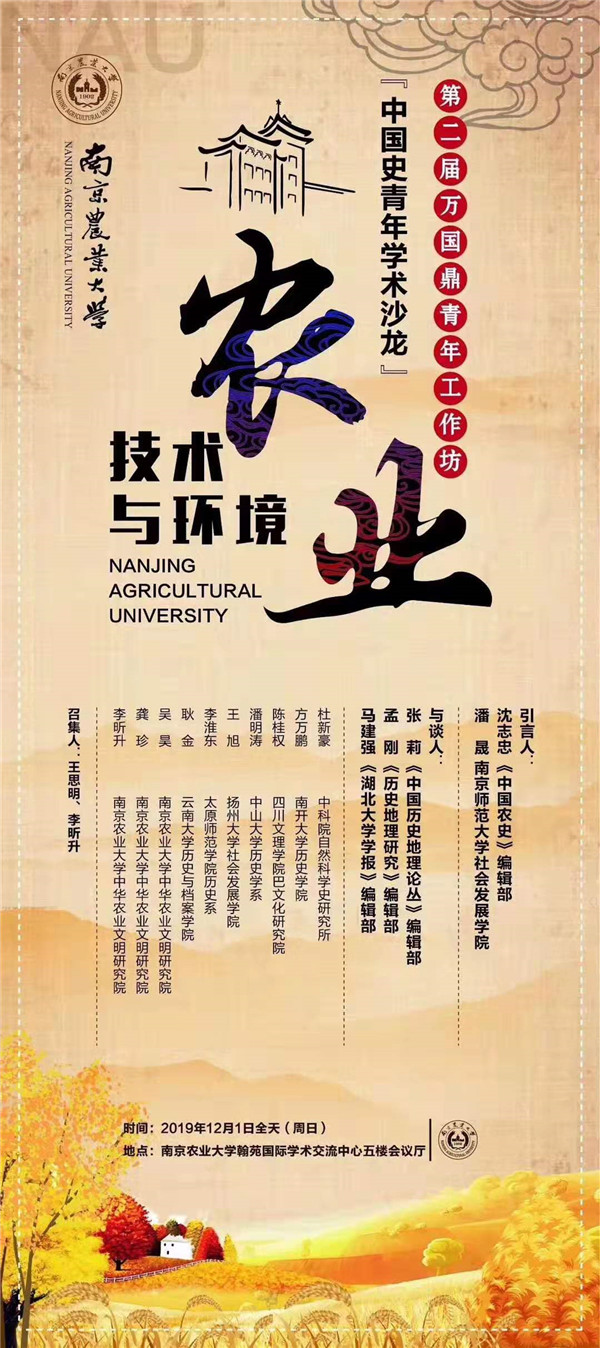
Theme: Agricultural Technology and Environment

Time: December 1, 2019

Organizer: China Institute of Agricultural Civilization, Nanjing Agricultural University

Theme: Dunhuang and Western Civilization High-end Forum

Time: December 3, 2019

Organizers: Dunhuang Studies Institute of Lanzhou University, Dunhuang and Western Civilization Institute of Lanzhou University.

Theme: Environment and Society in History

Time: December 6-8, 2019

Organizers: History Department of Fudan University, Editorial Department of World Studies, Shanghai Society of World History.

Theme: Medieval System and Society in China.

Time: December 7, 2019

Organizer: School of History, Beijing Normal University

Theme: digital humanities and the expansion of historical research field of vision

Time: December 7, 2019

Organizer: Department of History, School of Humanities, Shanghai Jiaotong University

Theme: The Third Academic Forum of Joint Research and Development and the Undergraduate Forum of History in Beijing, Tianjin and Hebei Universities.

Time: December 7-8, 2019

Organizer: History College of Nankai University

Theme: "Environment and Society in History"

Time: December 7-8, 2019

Organizers: History Department of Fudan University, Editorial Department of Historical Research, Shanghai World History Society.

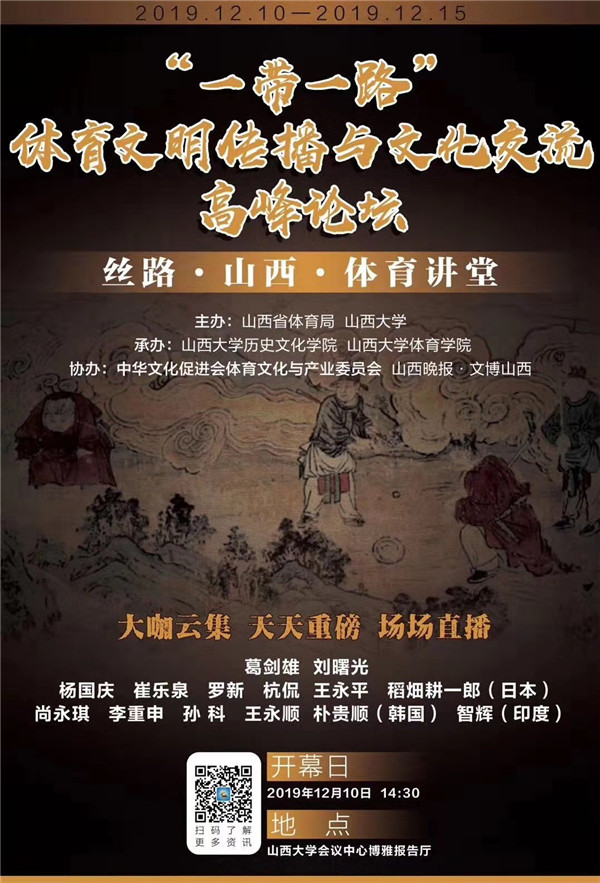
Theme: "One Belt, One Road" Sports Civilization Communication and Cultural Exchange

Time: December 10, 2019

Organizer: Shanxi Sports Bureau of Shanxi University

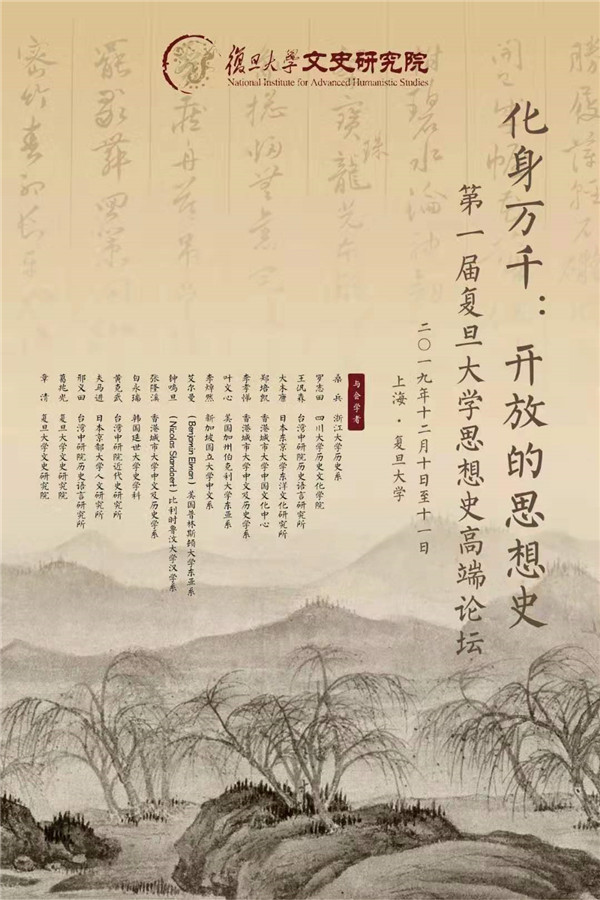
Theme: "Incarnation: An Open History of Thought" —— The First High-end Forum of Fudan University’s History of Thought

Time: December 10-11, 2019

Organizer: Institute of Literature and History, Fudan University

Theme: "21st Youth Academic Forum of Institute of Modern History, China Academy of Social Sciences"

Time: December 11-12, 2019

Organizers: Institute of Modern History of China Academy of Social Sciences, Department of History of Fudan University.

Subject: Literature, Text and Characters: Approaches and Methods of Chinese and Western Classical Studies.

Time: December 13-15, 2019

Organizers: National College of China Renmin University and Feng Qiyong Academic Museum.

Theme: The 4th World Archaeological Forum

Time: December 14, 2019

Organizer: Shanghai University

Theme: Art History and Archaeology

Time: December 14, 2019

Organizer: China Academy of Art.

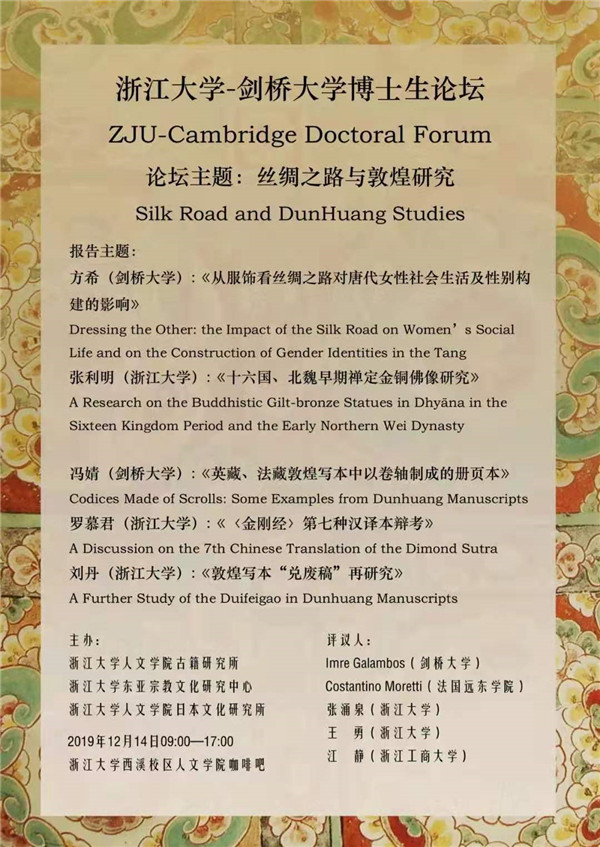
Subject: Zhejiang University-Cambridge University Doctoral Forum: Silk Road and Dunhuang Studies.

Time: December 14, 2019

Organizers: Institute of Ancient Books, School of Humanities, Zhejiang University, East Asian Religious Culture Research Center, Institute of Japanese Culture, School of Humanities, Zhejiang University.

Theme: National Graduate Association of Historical Geography and Founding Meeting of Young Yugong Society

Time: December 14, 2019

Organizer: Historical Geography Research Center of Fudan University and Youth Yugong Society.

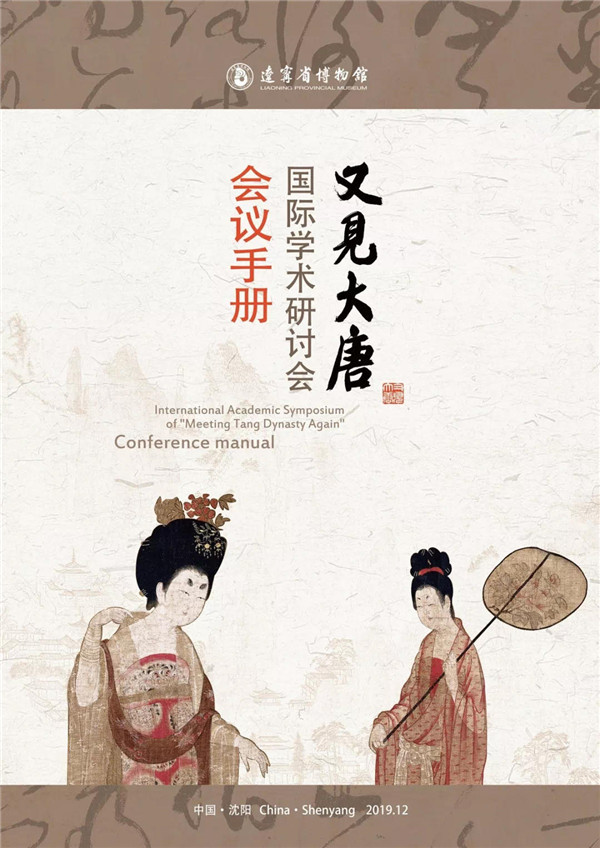
Theme: International Symposium on "See Datang Again"

Time: December 14-15, 2019

Organizer: Liaoning Provincial Museum

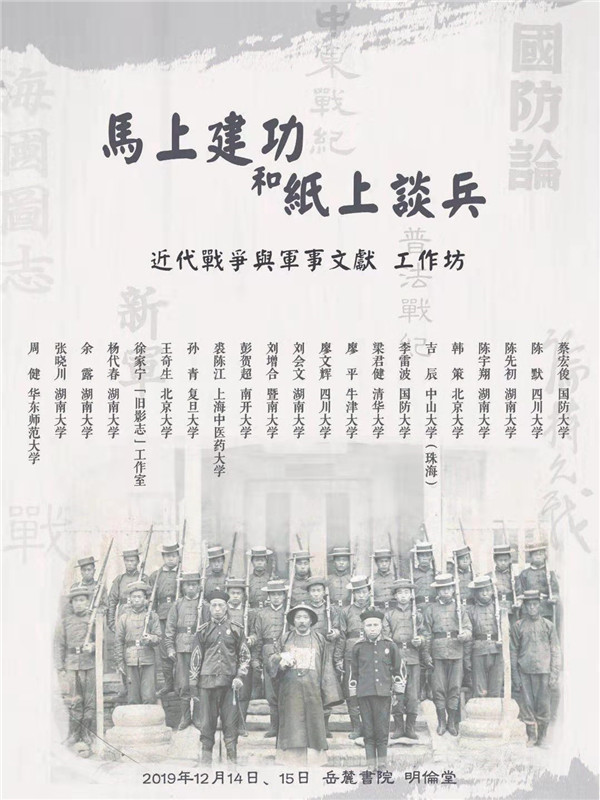
Theme: building achievements immediately and talking on paper: workshop on modern war and military literature

Time: December 14-15, 2019

Organizer: Yuelu Academy

Theme: Launching Ceremony of Digital Humanities and Beijing Digital Humanities International Workshop

Time: December 14-15, 2019

Organizers: Tsinghua University and Zhonghua Book Company.

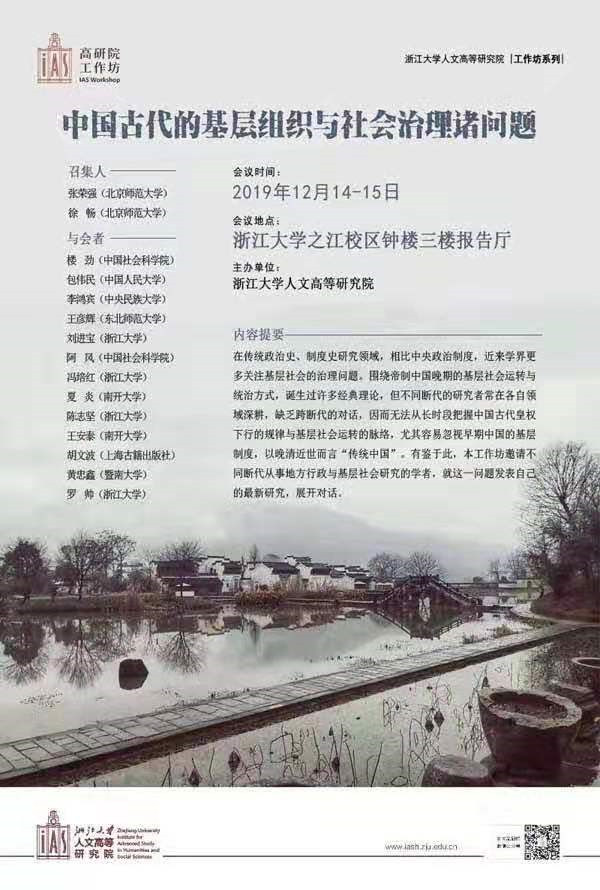
Theme: Grassroots organizations and social governance in ancient China.

Time: December 14-15, 2019

Organizer: Zhejiang University Institute of Humanities and Advanced Studies

Theme: Medieval History Salon Xixia History and Culture Special Session

Time: December 15, 2019

Organizer: China Western Frontier Research Institute of Shaanxi Normal University.

Theme: Farming-pastoral Ecotone and the History of China from 9th to 13th Century.

Time: December 15, 2019

Organizer: Tang and Song History Research Center, School of History, Capital Normal University

Theme: Inquiring and Thinking —— Historical Materials and Images in Art History

Time: December 19, 2019

Organizer: School of Art and Media, Beijing Normal University

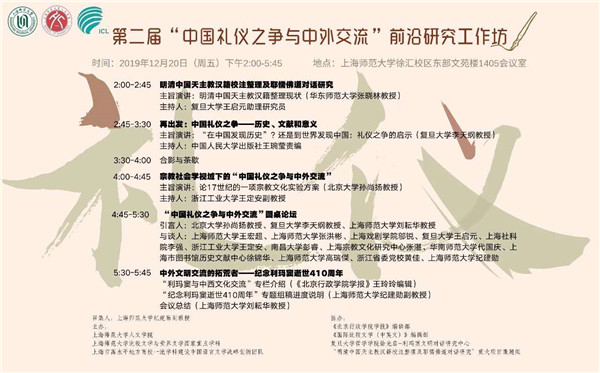
Theme: The 2nd Frontier Research Workshop on "Debate on Chinese Etiquette and Sino-foreign Communication"

Time: December 20, 2019

Organizer: Shanghai Normal University School of Humanities

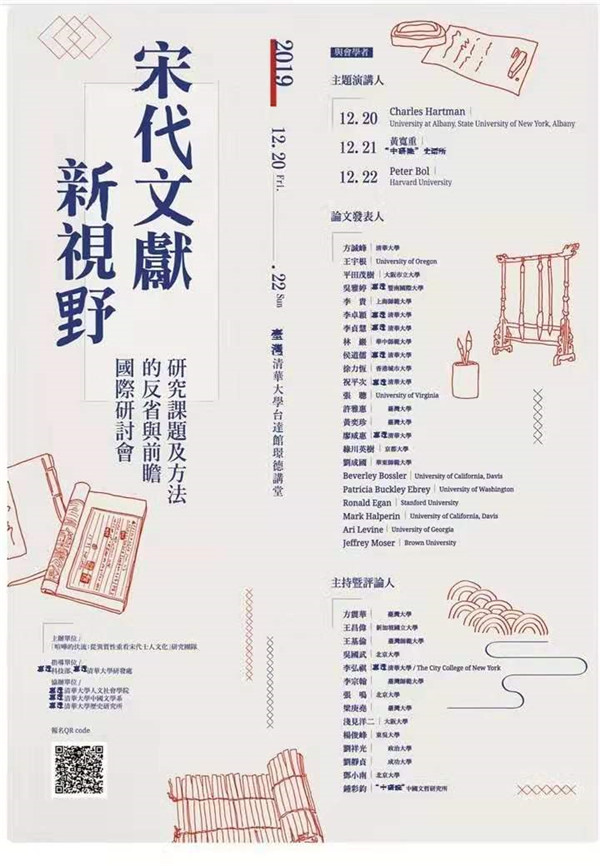
Theme: New Vision of Literature in Song Dynasty —— International Symposium on Introspection and Prospect of Research Topics and Methods

Time: December 20-22, 2019

Organizer: the research team of "the noisy undercurrent: revisiting the scholar culture in Song Dynasty from the perspective of heterogeneity" in Tsinghua University, Taiwan Province.

Theme: Academic Seminar on "Development and Utilization of Classics and Research on the Arrangement of Classics in Yuan Dynasty"

Time: December 21-22, 2019

Organizer: Institute of Ancient Books Arrangement, School of History, Beijing Normal University

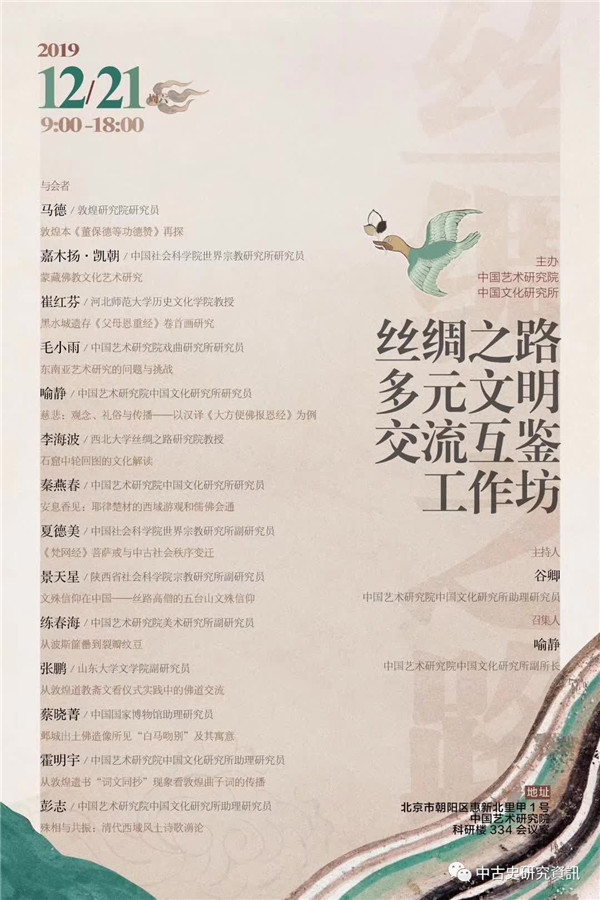
Theme: Silk Road Workshop on Multi-civilization Exchange and Mutual Learning

Time: December 21, 2019

Organizer: China Academy of Art, institute of chinese studies.

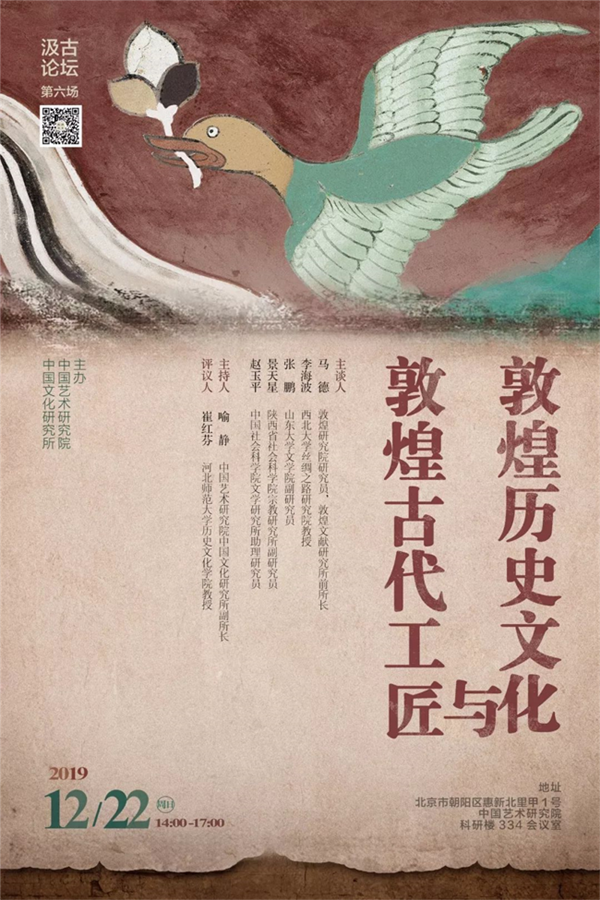
Theme: Seminar on "Dunhuang History and Culture and Dunhuang Ancient Craftsmen"

Time: December 22, 2019

Organizer: China Academy of Art, institute of chinese studies.

Theme: the first national high-level forum on historiography

Time: December 23-24

Organizer: Historical Research Institute

Theme: 2019 Guanghua Young Scholars Forum of Fudan University China Institute of Historical Geography Sub-forum

Time: December 27, 2019

Organizer: Institute of History and Geography, Fudan University

Theme: The Third Workshop on the Study of the History of the New Anti-Japanese War-Variation of History

Time: December 28, 2019

Organizer: History College of Nanjing University

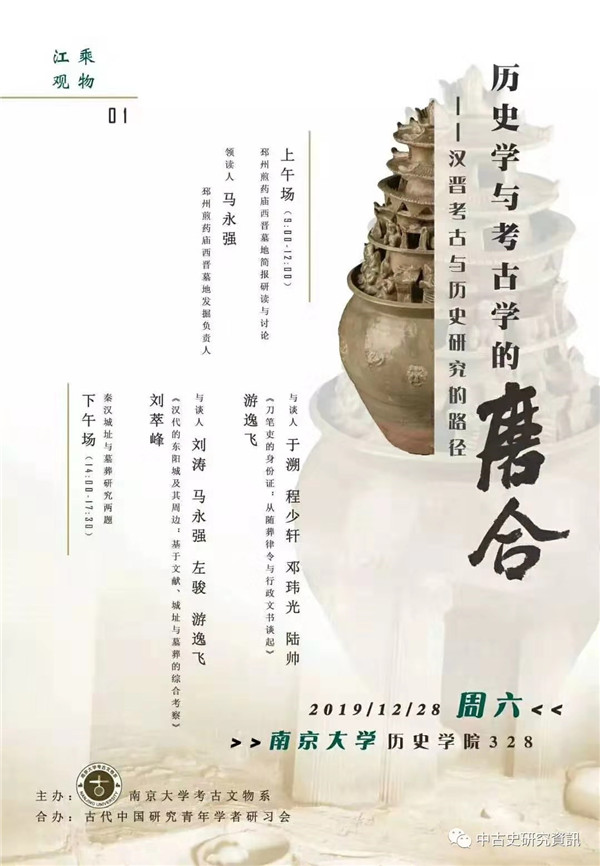
Theme: Running-in of History and Archaeology —— The Path of Archaeology and History Research in Han and Jin Dynasties

Time: December 28, 2019

Organizer: Department of Archaeology and Cultural Relics of Nanjing University

Theme: Symposium on "China and the World in the 20th Century: Archival Arrangement and Research in Gu Weijun"

Time: December 28-29, 2019

Organizer: History Department of Fudan University, Research Office of Chinese-foreign Relations History of Institute of Modern History of China Academy of Social Sciences.

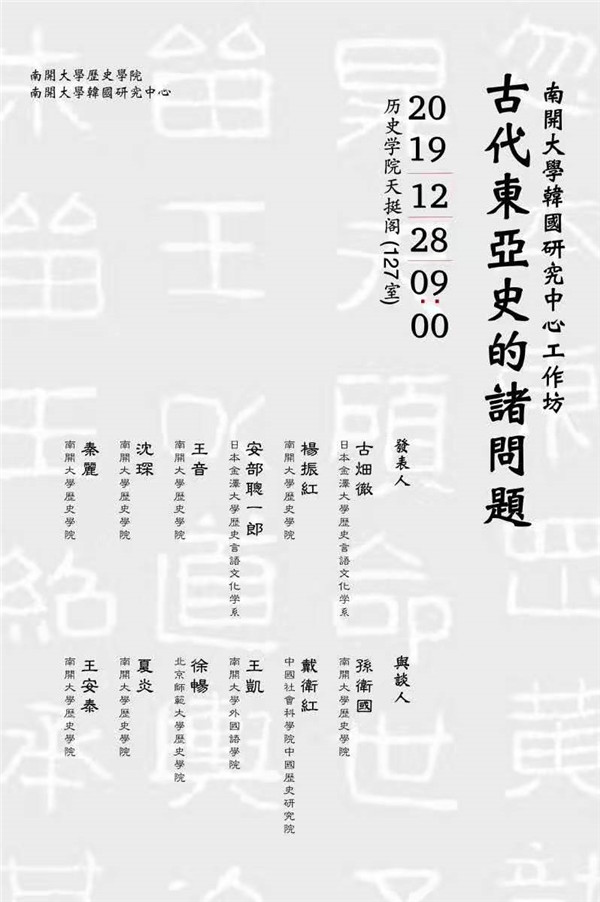
Topic: Workshop of Korea Studies Center of Nankai University: Problems of Ancient East Asian History.

Time: December 28, 2019

Organizers: School of History of Nankai University, Korea Research Center of Nankai University.

Theme: Historical Geography Research in the Information Age

Time: December 28, 2019

Organizer: Institute of History, Huazhong University of Science and Technology

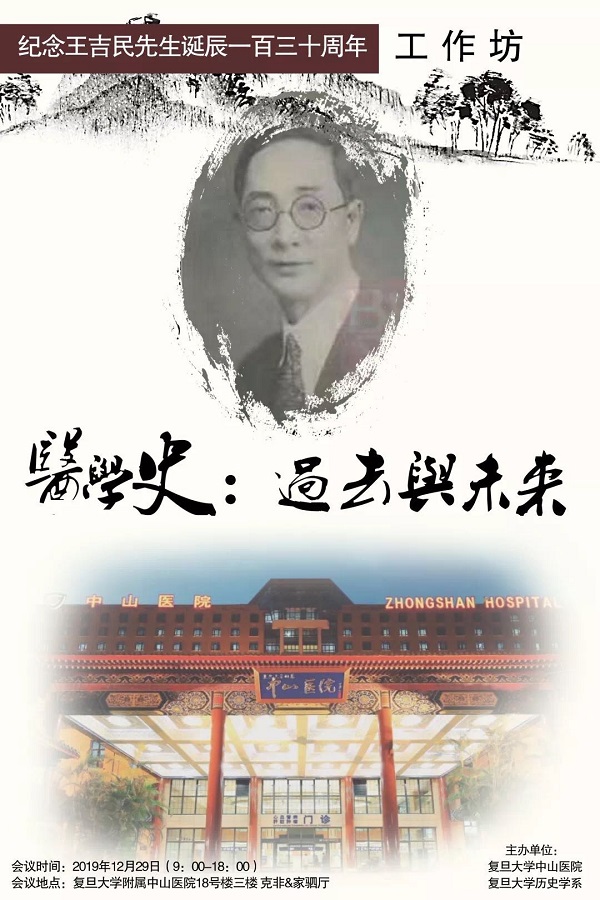
Subject: Medical History: Past and Future —— The 130th Anniversary of Mr. Wang Jimin’s Birth.   

Time: December 29, 2019   

Organizers: Zhongshan Hospital of Fudan University and History Department of Fudan University.

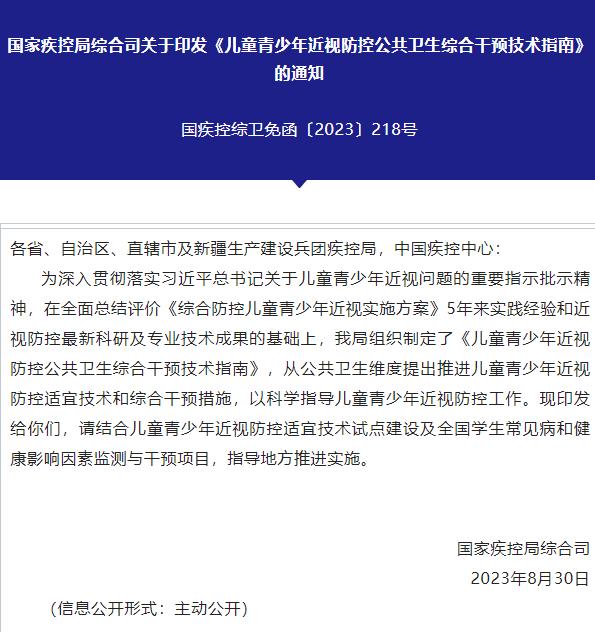
The National Bureau for Disease Control and Prevention issued the Technical Guide for Comprehensive Intervention of Public Health for Prevention and Control of Myopia in Children and Adolescents.

  Cctv newsAccording to the National Bureau of Disease Control and Prevention, research shows that myopia is the result of many factors, and children and adolescents are generally susceptible. On the basis of considering multiple causes, such as environmental and behavioral factors, genetic factors, eye evolution law and social and cultural factors, this paper puts forward intervention techniques for children and adolescents’ myopia, and adopts three-level prevention strategies to implement comprehensive public health intervention measures to prevent, reduce and slow down the occurrence and development of children and adolescents’ myopia.
  First, the prevention of public health intervention technology

  (1) Monitoring, evaluation and intervention of myopia risk behaviors.

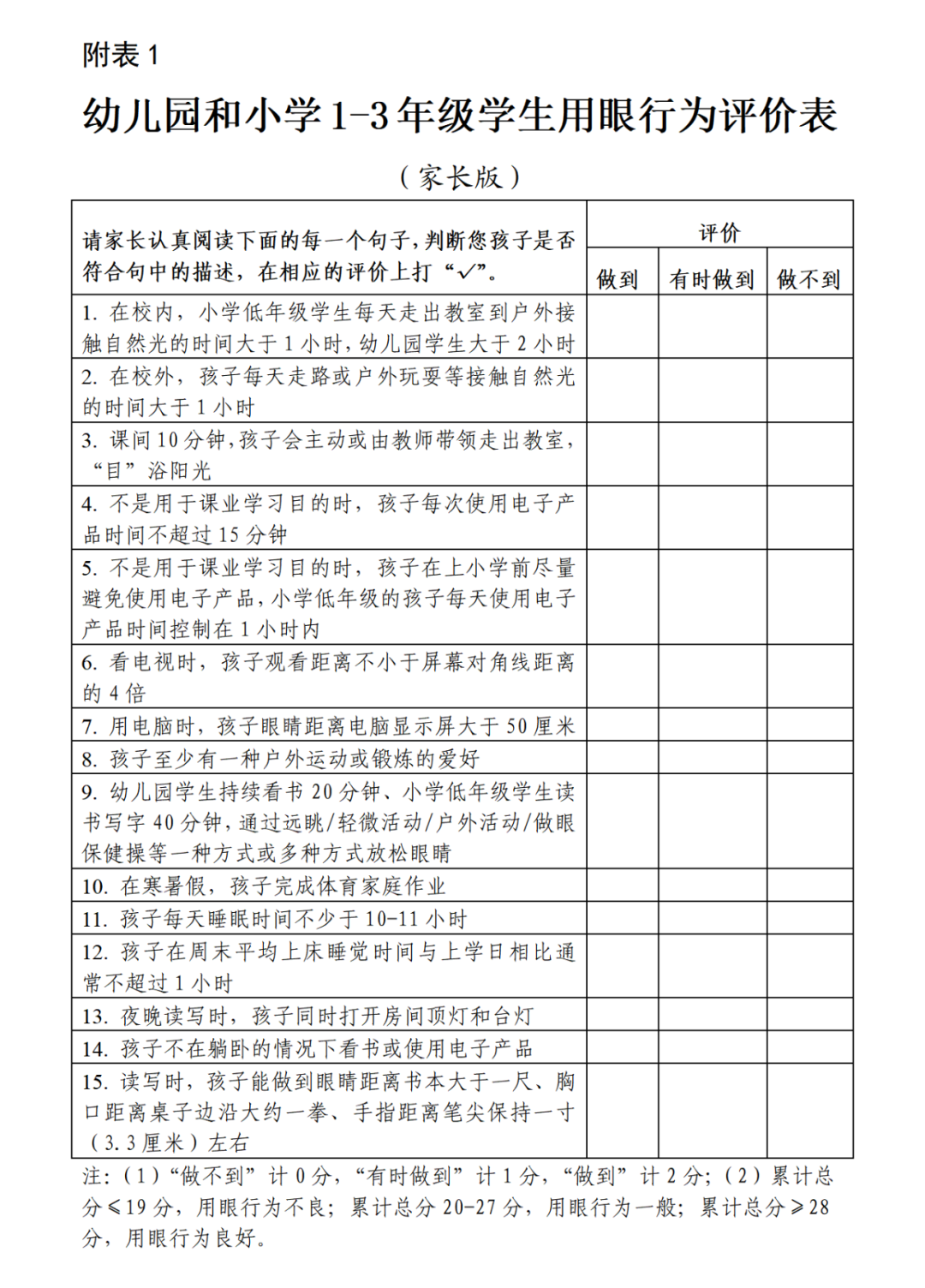
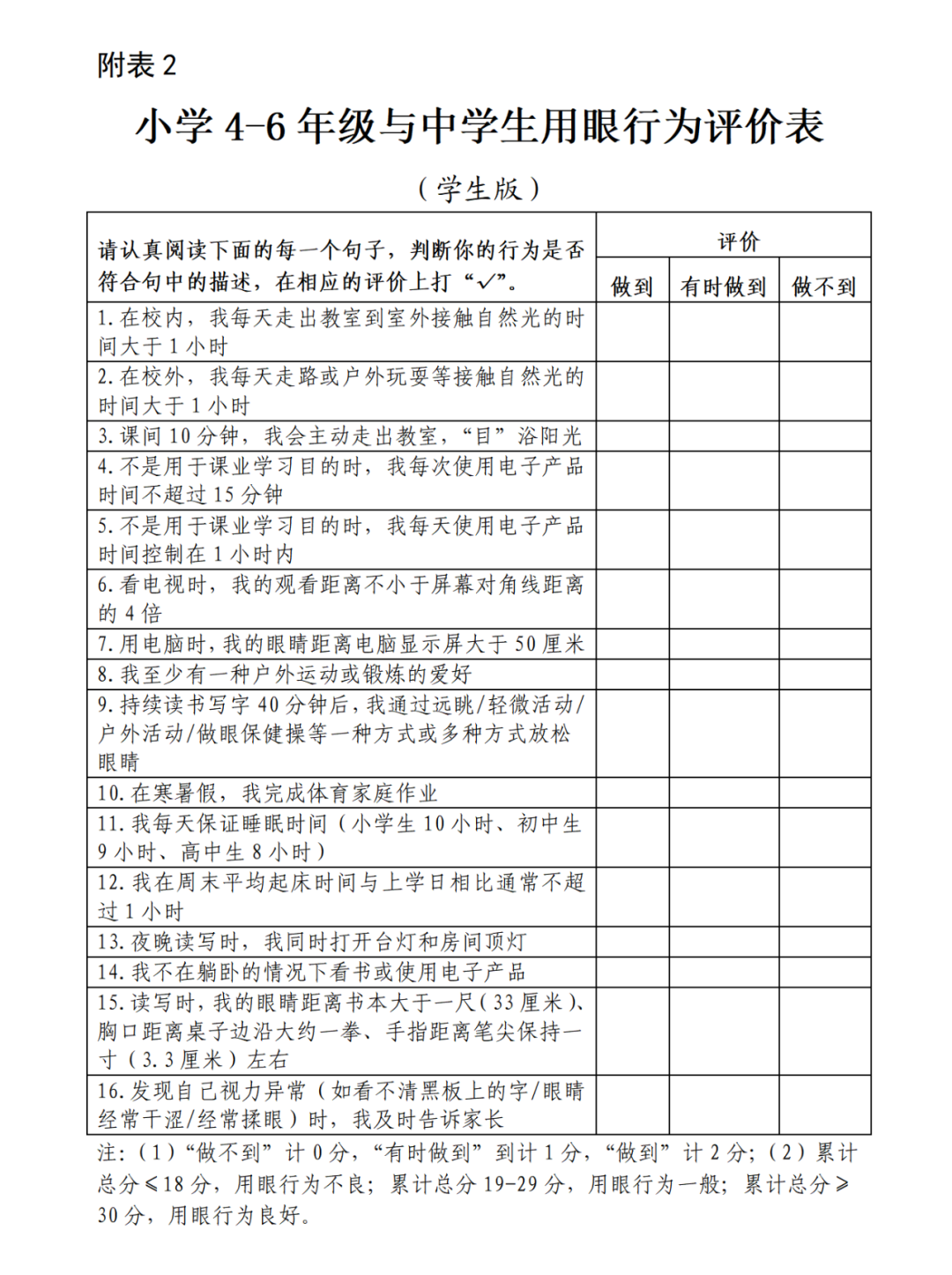
  1. Students’ eye behavior evaluation. For students of different school ages, the eye behavior evaluation form for kindergarten and primary school students in grades 1-3 (parent version) (attached table 1) and the eye behavior evaluation form for primary school students in grades 4-6 (student version) (attached table 2) were used to evaluate the eye behavior of kindergarten to middle school students, and to identify the risk behavior factors that affect myopia of children and adolescents, such as insufficient outdoor activities, excessive use of electronic products, lack of sleep or large social time difference, reading and writing.

  2. Application of evaluation results. According to the specific risk factors, teachers and parents should change the bad eye behavior of children and adolescents (the contents listed in Schedule 1 and Schedule 2 can be used as the contents of health education and behavior standards).

  3. Promote good eye use behavior with appropriate technology. Actively develop or use the existing appropriate technologies for myopia prevention and control, and apply them to promote the development of children and adolescents’ rational eye use behavior. For example, the height of the desk and chair measuring ruler (desk and chair deployment measuring ruler), correct reading and writing posture wall chart, light monitor, eye relaxation exercises, etc.

  (2) The visual environment of schools, families and communities has been improved.

  1. The construction of school visual friendly environment. Schools should provide students with good lighting and lighting environment according to the Hygienic Requirements for Prevention and Control of Myopia in School Supplies for Children and Adolescents (GB40070-2021). Each class should be equipped with desks and chairs to allocate measuring ruler, measure the height range of students regularly and adjust the desks and chairs in time. Each classroom should be equipped with adjustable desks and chairs or 2-3 types of desks and chairs according to the height range of students. The desks and chairs of the same type can be placed in columns, and the height of desks and chairs should be adjusted individually once every semester according to the height and sitting height of students. According to the perspective of students’ seats, the lighting situation in the classroom and the changes of students’ eyesight, the school will change students’ seats at least once a month. Multimedia classrooms should choose large-size projectors or computer screens. Under the same screen size, choose products with high screen resolution.

  2. Building a family visual friendly environment. The desk should be placed so that its long axis is perpendicular to the window. When studying during the day, natural light enters from the opposite side of the writing hand to avoid direct sunlight. The average illumination value of the desktop is not less than 300lx. Parents should adjust the height of desks and chairs regularly according to the growth and development of children and adolescents. Children and adolescents should be equipped with desk lamps that have passed the national compulsory product certification (CCC certification), and children and adolescents should turn on the ceiling lights in addition to using desk lamps when studying at night. When online learning is needed, electronic products with large screen such as TV and desktop computer should be selected, and electronic products with high screen resolution should be selected under the same screen size. The viewing distance of TV is not less than 4 times the diagonal distance of the screen, the horizontal viewing distance of computer is not less than 50cm, and the viewing distance of mobile phone is not less than 40cm. Children and teenagers don’t put televisions and computers in their bedrooms. They use dark curtains at night and don’t turn on the night light to sleep. Guide children and adolescents to avoid or reduce exposure to high brightness and blue light-rich electronic products at night.

  3. Community visual friendly environment construction. Green space can prevent or slow down the occurrence and development of myopia in children and adolescents by increasing outdoor time and reducing screen time. Reasonable green land is set up in the community, with certain activity facilities, which is suitable for carrying out all kinds of parent-child outdoor activities. The night light environment of residential quarters should comply with the current national standards. Except for indicative and functional signs, advertising lighting is not suitable for residential buildings (districts). The glare limit of night lighting lamps in residential and pedestrian areas, the maximum allowable value of illumination on the outer surface of windows of residential buildings, and the maximum allowable value of luminous intensity of night lighting lamps in the direction of rooms should be strengthened in accordance with the Planning Standard for Urban Lighting Construction (CJJ/T 307-2019).

  (3) 2 hours of outdoor activities and 1 hour of physical exercise during the day.

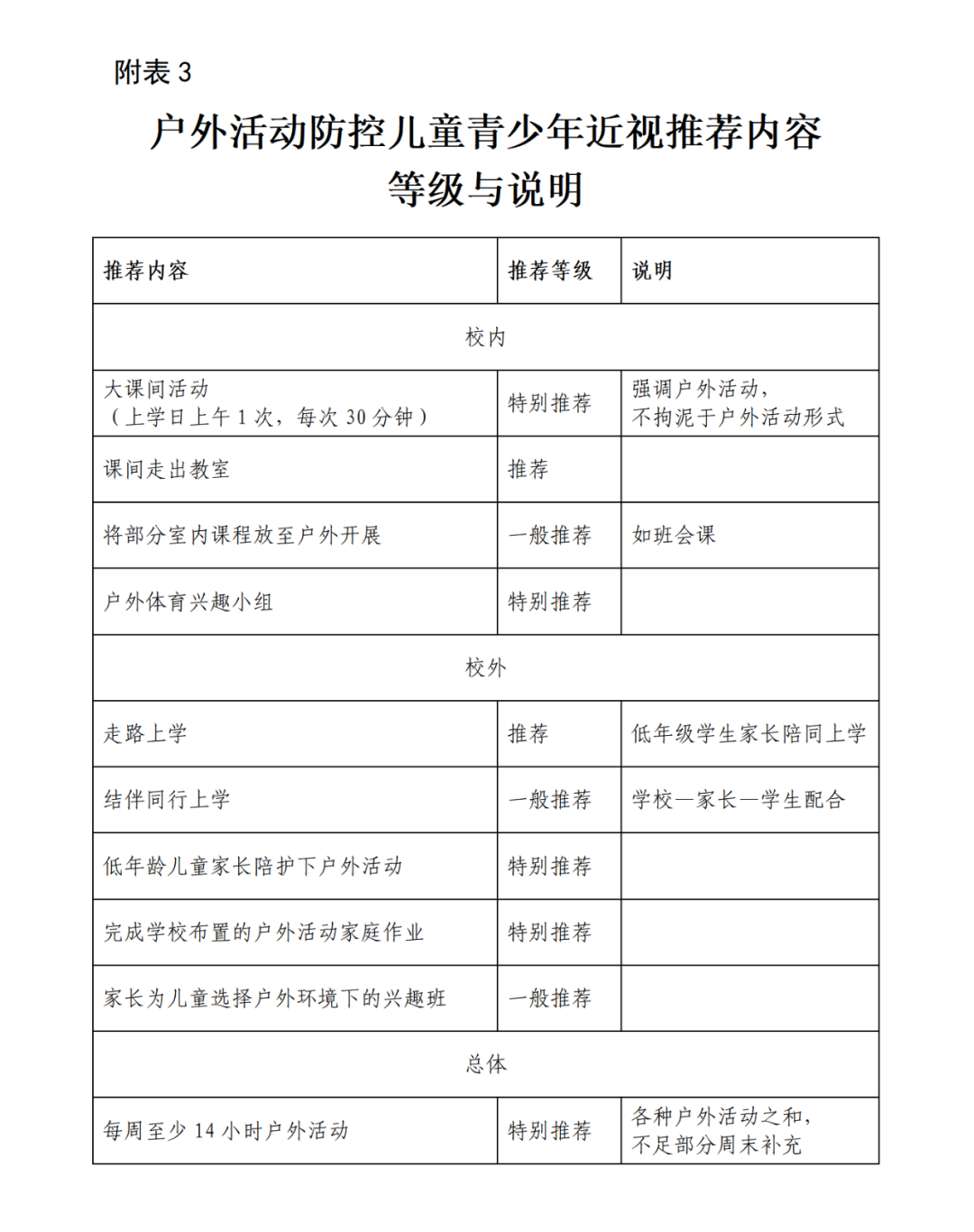
  1. Ensure 2 hours of outdoor activities every day and 14 hours every week. According to the Grade and Description of Recommended Contents for Prevention and Control of Children and Adolescents’ Myopia by Outdoor Activities (Attached Table 3), school-age children have two hours of outdoor activities during the day, which are carried out inside and outside the school. The insufficient time for daytime outdoor activities on school days should be made up on weekends and reach at least 14 hours of daytime outdoor activities every week. Kindergarten children advocate three hours of outdoor activities during the day and put more conservation content outdoors.

  2. Implement one-hour daytime outdoor activities on campus. The school arranges a 30-minute recess activity in the morning and afternoon, emphasizing outdoor activities and not sticking to the form and content of activities. Try to go to physical education class outdoors, and some indoor courses, such as class meetings, can be held outdoors. Set up outdoor activities interest groups and actively carry out various forms and rich contents of outdoor activities. Arrange extracurricular sports homework and provide high-quality exercise resources. Teachers should promptly remind students and class "eye guards" to supervise students to walk out of the classroom for 10 minutes between classes.

  3. Grasp the one-hour outdoor activities outside school. It is recommended that children and adolescents have a full or staged walking to school, and junior students should be accompanied by their parents. Parents encourage and actively participate in children’s extracurricular activities, complete extracurricular sports homework, and go outdoors and go to nature with their children on weekends and holidays. Schools, parents and students cooperate, actively explore the development of peer-to-peer school groups, increase the time of outdoor activities during the day, enhance exchanges between students, and reduce parental companionship.

  4. Exercise for 1 hour every day. According to the requirements of myopia prevention and control, children and adolescents should be outdoors for 2 hours every day, but according to the requirements of physical and mental health promotion, children and adolescents should be engaged in moderate to high-intensity physical activities for at least 60 minutes every day, mainly aerobic exercise. High-intensity aerobic exercise and muscle and bone strengthening exercise should be carried out at least three days a week. Taking physical education class as the starting point, the school guides students to carry out physical exercise, and brings the daytime outdoor physical exercise time into the range of 2 hours of daily outdoor activities.

  (4) Health education for all teachers, students and parents.

  1. Strengthen teachers’ health education ability. The school cooperates with public health professional institutions and medical colleges and universities to organize teachers to carry out health education and training on myopia prevention and control, so that teachers can master myopia prevention knowledge. Trained teachers popularize myopia prevention and control knowledge through health education classes, parent-teacher conferences, and myopia prevention and control theme class meetings.

  2. Improve students’ eye health literacy. Students should receive at least one health education course or theme class meeting for myopia prevention and control every semester to learn the knowledge and skills of eye protection in like eyes. Teachers guide students to make handwritten reports on myopia prevention knowledge, and carry out knowledge contests, group discussions, role-playing, etc. to improve students’ myopia prevention and control ability. Students will bring the knowledge of myopia prevention and control they have learned and mastered in school back to their families, which will influence their parents and give play to the role of "small hands and big hands" in myopia prevention and control. Advocate the school to train an "eye protector" or preacher in each class, publicize the knowledge about vision protection, and urge students to go out of the classroom during recess.

  3. Enhance parents’ awareness of vision protection. Parents should take the initiative to learn like eyes’s knowledge and skills of eye care, educate and urge their children to use their eyes scientifically, improve family lighting, adjust the height of desks and chairs, and correct the thought and behavior of "paying more attention to treatment than prevention", so as to realize the myopia prevention and control situation of "holding hands with big hands".

  4. Increase the construction of social supportive environment. Mobilize experts to enter schools and society, popularize scientific knowledge of myopia prevention, and educators and children and adolescents identify scientific vision correction measures. Experts and scholars actively compile and publish popular science materials and books on myopia prevention and control health education, and make new media health education materials. Professional institutions, schools and communities should join forces to promote the dissemination and sharing of health education information and improve the coverage and efficiency of health education by using mobile health platforms or technologies, such as smart phone applications, SMS services and telephone intervention. Severely crack down on the false and illegal marketing and propaganda behavior of children and adolescents’ myopia prevention and control products.

  Second, the secondary prevention of public health intervention technology

  (1) Vision health screening.

  Establish a regular vision screening system, carry out poor vision screening, the screening frequency is not less than 2 times per academic year, standardize the recording of inspection contents, and establish information management of vision health. Pay attention to the standardization of screening and filing process, strengthen quality control, and implement closed-loop management of grading after screening. With the help of artificial intelligence technology, the degree of automation of vision screening is improved, and the work efficiency and popularization are improved.

  (2) Early warning management of myopia.

  Timely analysis of children’s and adolescents’ visual health, early screening of myopia and other ametropia, dynamic observation of the development and changes of children’s and adolescents’ refractive status in different periods, early detection of myopia tendency or trend, establishment of myopia early warning model, and formulation of applicable and feasible intervention measures to slow down the rapid and severe development of myopia. Combined with vision screening and file establishment, it is suggested that children and adolescents with normal vision but with high risk factors of myopia or insufficient hyperopia reserve should change their high-risk behaviors, and schools, families and communities should cooperate to increase outdoor activities during the day, reduce the behavior of using eyes at close range and improve the visual environment. For those with pre-myopia, we should give high-risk early warning and focus on intervention. It is suggested to go to professional institutions to receive professional examinations such as medical optometry, make a clear diagnosis and take corresponding measures in time to control and slow down the occurrence and development of myopia in children and adolescents.

  Three, three prevention of public health intervention technology

  (1) scientifically correct myopia.

  For children and adolescents who are already nearsighted, parents should be instructed to take their children to professional institutions for examination and correction in time. If it is determined that they need to wear glasses after professional examination, parents should choose glasses with appropriate degrees for their children according to the requirements of doctors or optometrists, wear glasses according to the doctor’s advice, and conduct regular follow-up.

  (2) Preventing and controlling the aggravation and complications of myopia.

  For children and adolescents with early onset of myopia or rapid development of myopia, specialists should adopt optical correction, drug correction or traditional Chinese medicine to slow down the progress of myopia. Parents should go to regular medical institutions, choose measures suitable for their children under the guidance of doctors or optometrists, and use them according to the doctor’s advice. For children and adolescents with fundus pathological changes and other complications, parents should take their children to professional medical institutions for treatment by specialists in time.

  Fourth, the specific implementation measures

  (1) Grasp early and small, and implement it in the whole life cycle.

  1. The implementation of vision health management pass forward. Early detection of the shortage of hyperopia reserves and timely intervention measures are the key to move forward the prevention and control of myopia for children and adolescents. Move forward in the prevention and control cycle, grasp early and grasp small; Move forward in the prevention and control link, from treatment to early warning; Move forward in the sense of prevention and carry out early intervention for students with healthy vision. Move the myopia defense line forward to pregnancy, infants and preschool stage. Strengthen parents’ and teachers’ awareness of myopia prevention and control, and regard infants, preschool children and lower grades of primary schools as the key links of myopia prevention and control.

  2. Promote the prevention and control of myopia in the whole life cycle. From the perspective of the whole life cycle, it focuses on the potentially sensitive periods such as pre-pregnancy, pregnancy, infants, preschool, school age, etc., so as to reduce the impact of biological, environmental and behavioral risk factors in each period on the visual health of children and adolescents. From pre-pregnancy, pregnancy and perinatal period, develop a healthy lifestyle, monitor health status in real time, and reduce the risk of gestational diabetes, hypertension and premature delivery, so as to reduce the risk of myopia in children and adolescents. Implement the "Standard for Eye Care and Vision Examination Services for Children Aged 0-6", establish children’s eye health files, and make one file for each person, which will be transferred in real time with children and adolescents entering school. Popularize the scientific knowledge of children’s eye care to parents, and guide families to actively accept children’s eye care and vision examination services. Carry out health guidance, don’t touch the electronic screen before the age of 3, preschool children should try to avoid touching and using video electronic products, reduce the time of using their eyes at close range, increase the time of outdoor activities, maintain correct reading and writing posture, develop good sleep habits and ensure adequate and regular sleep. At school age, we should advocate at least one hour of outdoor activities in and out of school every day, reduce long-term close eye use and maintain adequate regular sleep. Implementing myopia prevention and control from the whole life cycle can realize the forward movement of myopia prevention and control and improve the vision health in the whole life cycle.

  (B) the combination of prevention and control, the whole population and key population strategy.

  1. The whole crowd strategy. Children and adolescents are generally susceptible to myopia, so it is necessary to take the whole population strategy to prevent and control myopia, carry out health education on myopia prevention and control, increase outdoor activities during the day, reduce long-term use of eyes at close range, build a visually friendly environment and other public health intervention measures to do a good job of prevention and control at the first level of the whole population.

  2. Key population strategy. According to the stages of myopia, corresponding intervention measures should be carried out to reduce the risk of rapid development of myopia. For those with normal vision and sufficient hyperopia reserve, prevent the hyperopia reserve from being consumed prematurely. The main goal of prevention and control of myopia is to slow down the occurrence of myopia. Low myopia should control the progress of myopia, while high myopia should prevent fundus lesions and reduce the risk of blindness.

  (three) demonstration and guidance, strengthen the prevention and control and intervention process and effect evaluation.

  1. Pilot first, demonstration leading. Construct a six-in-one comprehensive prevention and control strategy of government leadership, responsibility of competent departments, monitoring of professional health institutions, school leadership, family cooperation and students’ subjectivity. Disease control institutions at all levels rely on the monitoring of common diseases and health influencing factors of students and the appropriate technology pilot platform to implement the monitoring of myopia of children and adolescents, guide and coordinate relevant parties to implement effective comprehensive public health intervention measures, and take outdoor activities and sports activities as the main starting point to realize the prevention of multiple diseases.

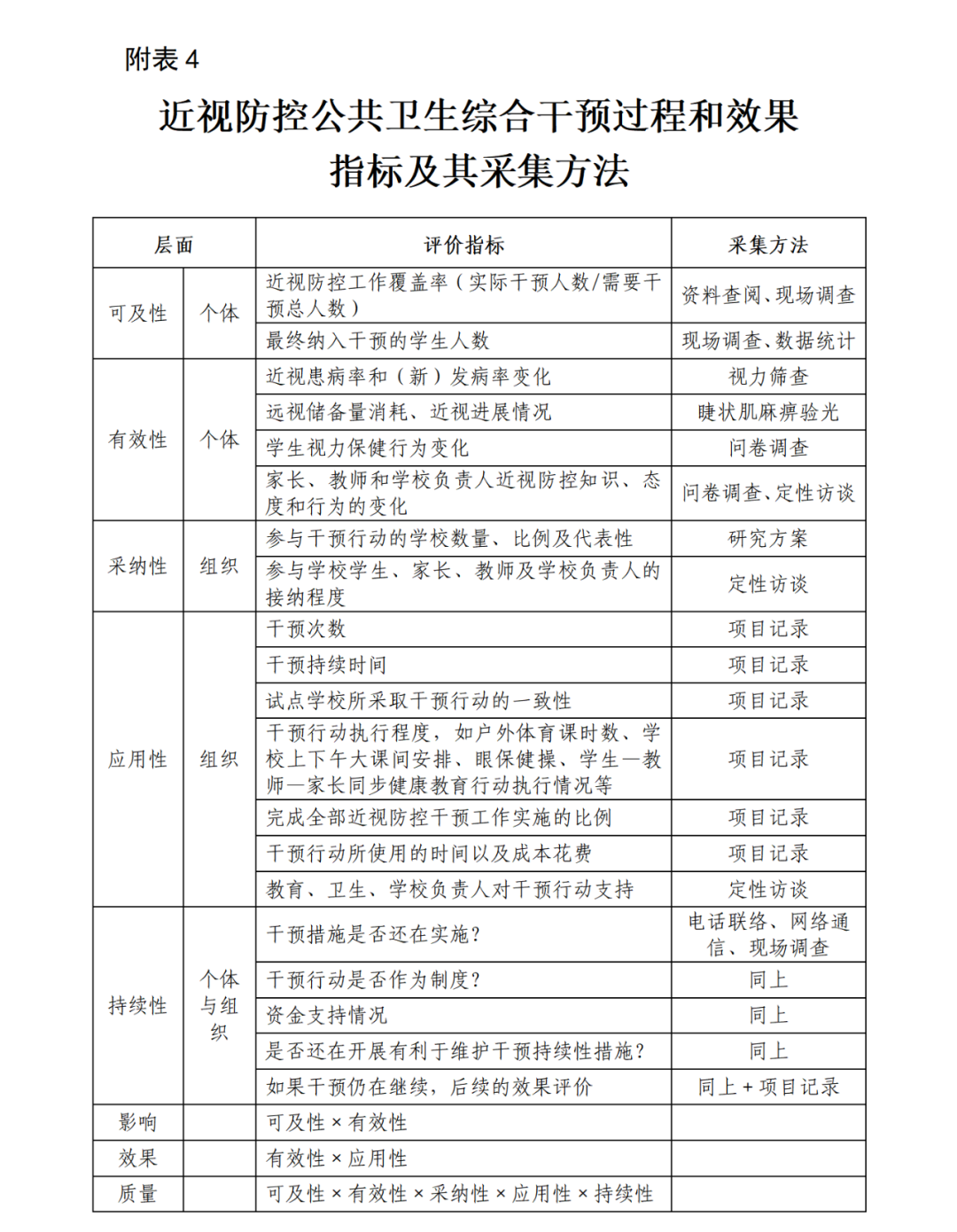
  2. Pay attention to process and effect evaluation. Disease control institutions at all levels should regularly carry out students’ vision monitoring, deeply analyze the monitoring data over the years, and report the main students’ health problems and suggestions found in the monitoring to the local government in time. Based on the practical research method, the transformation and application from theory to practice can promote the implementation and dissemination of intervention actions. Conduct process and effect evaluation, introduce the implementation research framework and theoretical model, such as the process and effect indicators of comprehensive public health intervention for myopia prevention and control and its collection method (Table 4), comprehensively evaluate the accessibility, effectiveness, applicability and sustainability of intervention actions from the individual level and organizational level, and systematically evaluate the implementation effect of comprehensive public health intervention for children and adolescents with myopia.
  

The role of Yang Mi’s new film is exposed as a provocative cosmetic beauty e-commerce company.

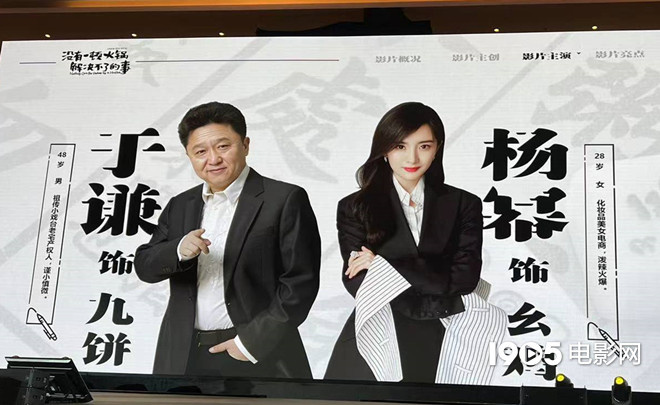
1905 movie network news Recently, the suspense crime comedy starring, appeared in the 2023 National Cinema Film Promotion Conference, and the name and personnel of the starring role were exposed. In the film, Yang Mi plays a sultry beauty e-commerce named Mo Chicken; Yu Qian plays a cautious owner of the ancestral small stage and old house named Jiubing.


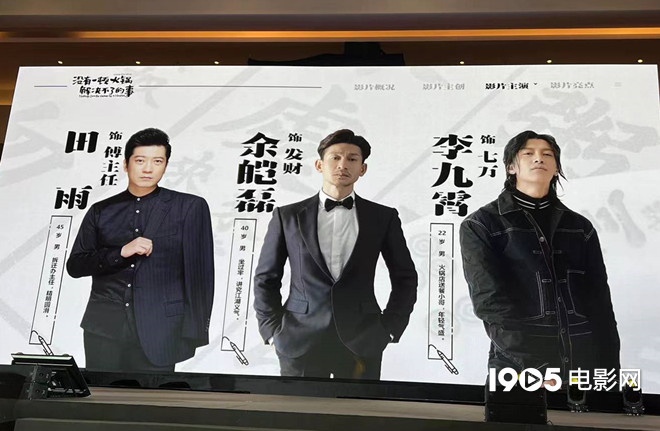
Play the shrewd and smooth director of the demolition office; The role is called getting rich, having been in prison, and paying attention to the loyalty of the rivers and lakes; Starring in a youthful hot pot restaurant with a delivery brother of 70 thousand. All the characters are named after Mahjong, which is very interesting.


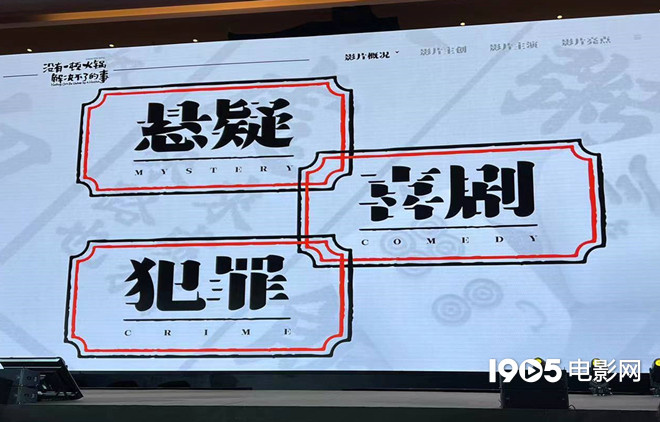
"Nothing can’t be solved in a hot pot" tells a story that there is a plan, a game, and people are not as good as the sky: four strangers share the stolen goods in the backstage warehouse of the theater, but they are accidentally involved in a murder case, and a hot pot in YOLO rolls with endless suspense, and greed and deception lead to a series of reversals. Finally, the special identity of the four people gradually surfaced, and the mysterious truth was also coming out … …


The new IVECO Way: more comfortable, stronger, more fuel-efficient and smarter

  IVECO has launched a new generation of Way models, which continue to be classic and introduce advanced new features to enhance comfort. It is equipped with a more powerful and efficient new xCursor 13 engine, and features improved aerodynamics and advanced GPS predictive driving technology. The new features and services will greatly improve customer operational efficiency and provide a more comfortable, safe and connected experience for drivers and passengers, making this generation of Way series a powerful Way model.

  XCursor 13: An advanced engine with high fuel efficiency

  The IVECO Way range offers drivers a wide range of powertrain options to meet their mission requirements. The top engine to choose from is the new xCursor 13 developed by FPT Industrial, a sister brand of the IVECO Group known for its advanced powertrain technology.

  This new diesel engine uses a range of advanced powertrain technologies, including a dual-flow turbocyclone reduction system, higher fuel injection pressure (2500 bar), new lightweight cylinders, crankshafts and camshafts, intelligent assistive equipment, and friction reduction technologies.

  The powerful configuration can output 580 horsepower and 2,800 Nm of torque, perfectly meeting the high performance requirements of handling heavy-duty tasks; while the 500 horsepower version is matched with 2,600 Nm of torque, making it a good choice for improving efficiency on long-distance missions, with a 10% increase in fuel efficiency. In addition, advanced new features and professional services can also improve fuel efficiency by an additional 4%.

  GPS predictive driving can now also identify curves and circular routes and adjust the cruise control speed accordingly. Energy-efficient driving patterns are optimized through shift strategy, torque control, and fuel-efficient coasting, managed by remote on-board communication technology.

  The engine is 10% lighter than the discontinued Cursor 11 and lasts 1.60 million kilometers, 33% longer than the previous generation.

  This new high-performance engine brake is the market leader with a 30% increase in efficiency, replacing traditional retarders in most mission scenarios. In addition, the use of this engine brake also brings several benefits, including reduced cost, weight reduction and lower fuel consumption.

  The new engine is equipped with a 17xHE Meritor shaft for faster deceleration and smoother traction transmission, as well as a responsive ZF 12-speed TRAXON Gen2 transmission. The new transmission comes with several upgrades, such as a shift assist system for synchronous transmission and engine braking, and a reverse assist system to assist the driver in reversing when parking.

  Help save energy and reduce emissions

  IVECO’s new S-Way and X-Way natural gas models offer significant improvements in fuel efficiency and performance, delivering power output of up to 500 horsepower and 2,200 Nm of torque, while reducing fuel consumption by 11%. This robust performance is complemented by the environmentally friendly nature of the natural gas models, especially when using biomethane, which can significantly reduce vehicle emissions compared to diesel vehicles, reducing carbon dioxide emissions by 90%. In addition, both models also demonstrate significant noise reduction. As the fleet works to reduce its adverse impact on the environment, the IVECO S-Way and X-Way natural gas models offer a viable solution while ensuring robust performance.

  Driver-centric haptic design for robust comfort and safety

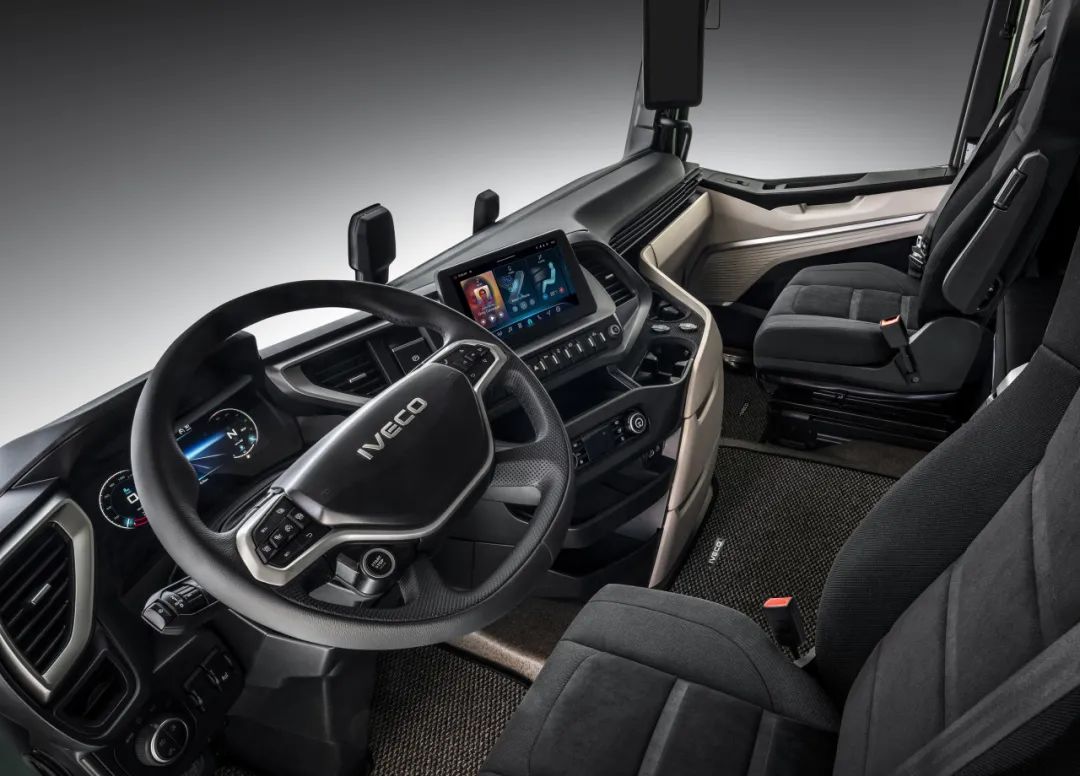
  With a strong focus on the driver and their experience, IVECO has significantly upgraded the S-Way and X-Way driver-centric AS cabins, with the aim of maximizing comfort, enhancing the driving experience and expanding the field of vision ahead. A new interior design, customizable dashboard (choice of materials and colors), fully digital cockpit, thin film transistor (TFT) display dashboard, new infotainment system and electronic mirrors all lay the foundation for a comfortable in-vehicle living experience.

  The IVECO S-Way and X-Way AS cabs have been praised for their seating positions. Engineers took advantage of the updated ergonomics to design a smaller, vertical steering wheel and expand its adjustment range, providing the driver with a sedan-like driving feeling and further enhancing comfort. The new interior design has a unique appearance, makes use of extra storage space, and rationally arranges switchgear, which easily improves the overall level of driving ergonomics. In addition, the electronic parking brake with automatic start function also further improves the utilization of internal space.

  The new folding table panel is located on the passenger side of the dashboard, providing a flat work table and convenient USB charging socket for the needs of the cab task. Additional storage compartments allow for easy storage of items and documents in the car and on the bottom. The dashboard comes standard with two USB ports.

  Another highlight is the electronic rearview mirrors, which provide the driver with a wider field of view. In addition, these aerodynamic cameras mounted above the door not only expand the field of view, but also reduce wind resistance, thus saving up to 1.5% of fuel compared to traditional rearview mirrors.

  Better meet task configuration requirements

  The IVECO S-Way and X-Way are now equipped with a new enhanced front air suspension system, featuring high-stroke air springs and the addition of a Gross Axle Weight configuration of 9 tons. This new pneumatic configuration is now available in a wider range of chassis derivatives, including ON + configurations, 6×4 and 8×4 Tridem.

  6X2 chassis vehicles can now benefit from the new 9.0-ton reinforced lift axle, especially for rear-mounted refuse collection and rear cantilever cranes.

  For heavier loads, we have introduced a new 18x single-stage reduction shaft with new bearings, gearing, and braking systems that can withstand up to 60 tons of total trailer weight, achieving a balance between robustness, performance, and efficiency.

  Customize the appearance of the vehicle at will

  Customers can now personalise their Iveco S-Way and X-Way with a range of new personalisation options, enhancing their sense of belonging within the Iveco family. In addition to offering the new Iveco logo in chrome or matte gun colour, there are eight different intake grilles to choose from, including bright finishes, metallic elements and even a choice of body colour. As a result, customers can tailor the vehicle’s look to their corporate brand perception or choose a unique style to make their vehicle stand out.

  Provide a user-friendly vehicle interface, and new technologies enable a comfortable and relaxed driving experience

  In the cab of the new IVECO Way range, innovative technology plays an important role. A diverse 12- or 10-inch digital instrument cluster provides the driver with vehicle information, which can be configured according to their individual preferences. Equipped with an advanced Advanced Driver Assistance System (ADAS) interface and integrated infotainment, information is clearly presented and the driver’s cognitive load is reduced.

  The new 10- or 7-inch infotainment display is fully reconfigurable, putting media and other key controls at your fingertips. The new display is responsive and covers everything from climate control to a fully integrated Alexa experience. Wireless Apple CarPlay and Android Auto make it easy for drivers to access all the apps on their smartphones, while the new system pairs two phones via Bluetooth.

  The IVECO Way series is now fully equipped with the L2 advanced driver assistance system, which significantly enhances safety and driving comfort.

  Advanced driver assistance systems assist drivers on long-distance missions. Highway assistance systems use cameras, active steering, and capacitive hands-off detection to help the vehicle stay in the center of the lane while detecting and correcting trajectory deviations. Adaptive cruise control, Stop & Go, ensures a fixed speed and a safe distance from the vehicle ahead. It also automatically stops and restarts in traffic jams.

  In addition, the new Way series also introduces a comprehensive set of safety features, such as blind spot and driving area information system (to protect traffic disadvantaged groups near the vehicle), driver fatigue detection system (Driver Drowsiness Detection), Intelligent Speed Assist system (Intelligent Speed Assist) and Alcohol Interlock system (Alcohol Interlock).

  Create new digital capabilities and services exclusive to drivers and fleet managers

  In addition to the redesigned cab, IVECO focuses on the driver, improving their safety and efficiency with newly upgraded digital capabilities. The new Driver’s Health service monitors the driver’s vital signs and combines data generated by the vehicle’s Advanced Driver Assistance System (ADAS) to prevent health emergencies, protect the driver and promote road safety. Professional safety reporting has been upgraded to provide more advanced automated reporting with the new Vehicle Advanced Driver Assistance System (ADAS) to enhance driver safety on the road. The IVECO Driver Pal voice assistant is now fully integrated into the infotainment system, providing a seamless experience for the driver and facilitating the use of voice management functions by the driver. The Easy Way app has been upgraded to provide features such as digital checklists, remote controls, and interactive user manuals, saving time and increasing efficiency.

  The connectivity of the IVECO S-Way also unlocks new capabilities for fleet managers. The IVECO ON Customer Portal has evolved into their connectivity hub, where they can monitor and manage vehicles and streamline business management efforts. The new remote commands accessed by the IVECO ON Portal enable remote control of multiple vehicle settings, ensuring that the IVECO S-Way is always driven in an efficient and safe manner. Advanced predictive diagnostics services use new algorithms to monitor the health of vehicles and the remaining life of complex components such as exhaust aftertreatment systems.

  IVECO Services: Customized multi-faceted transportation solutions for customers

  The IVECO Way range is equipped with a portfolio of services designed to increase the productivity and profitability of our customers’ businesses by maximizing vehicle uptime and efficiency, enhancing driver safety, and protecting the environment. Our goal is to provide our customers with multi-faceted transportation solutions that meet their needs.

  Uptime (Uptime) services include real-time monitoring, remote diagnostics and maintenance programs designed to avoid unplanned outages, thus minimizing vehicle downtime. Productivity and efficiency services are designed to help customers reduce fuel consumption, optimize routes and improve driving. Driver care and safety services are designed to promote safer driving, monitor driver performance and improve their safety, while parts and accessories services offer a wide range of products for custom vehicles. In addition, IVECO Finance offers customers comprehensive financial solutions covering electric vehicles as well as IVECO’s full range of products, including financing, leasing and insurance services in various markets.

  IVECO’s modular service solution makes it easier for customers to choose a portfolio of services that meets their specific needs. Based on previous experience, IVECO has also pre-configured a number of packaged portfolio services, starting with the launch of Start Pack, which aims to simplify customer vehicle management, monitor vehicles and optimize fleet efficiency through the IVECO ON customer portal; maximize the uptime of the connected IVECO S-Way with Uptime Monitoring & Management; and launch the new Easy Way app to make driving easier for drivers.

  Customers can choose to configure advanced packages to customize service solutions. PRODUCTIVITY Basic covers IVECO ON Plus, which provides Eco Lock remote control and vehicle location updates, as well as Professional Fuel Report to help identify potential efficiency gains.

  PRODUCTIVITY Advanced carries all the features of PRODUCTIVITY Basic with the addition of ECODRIVING to help customers achieve their sustainability goals through analysis and specialized training. The DRIVER ASSITANT package extends TomTom Live and Driver Pal services to the third and fourth years. In addition to IVECO ON Plus, the Safety Pack also provides professional safety reports for assessing and improving driving style. UPTIME Plus includes IVECO maintenance and repair, and low maintenance costs give customers peace of mind. The package also includes IVECO TOP CARE, ensuring a good service for vehicles and drivers, covering fast repairs, hotel accommodation, meals, transfers, parking, and non-lethal medical care.

Second-born elderly women, especially obese pregnant women, should be alert to thrombosis.

  Thrombosis is small, but sometimes it can be fatal. With the liberalization of the second child policy, more and more elderly women have plans to have a second child, and elderly pregnant women are the high-risk population of obstetric thrombosis. Why do pregnant women easily lead to venous thrombosis of lower limbs? What serious harm will it do if it is not handled in time? Gu Xiaoxia, head nurse of Obstetrics and Gynecology Department of Zhongda Hospital affiliated to Southeast University, specially reminded the elderly pregnant women, especially obese pregnant mothers, to be more alert to thrombosis.

  We often say that deep vein thrombosis is a "silent killer" because about 80% patients may have no obvious symptoms, but when it falls off, it may lead to fatal consequences. If the thrombus falls off from the venous wall, it will float to the lungs with the venous blood flow and get stuck in the blood vessels in the lungs, causing pulmonary embolism, causing severe chest pain, dyspnea and even sudden death. If pregnant women have blood clots, it may lead to serious harm such as fetal abortion and stillbirth.

  Venous thrombosis mainly occurs in legs and lungs, among which leg thrombosis is the most common. Once deep vein thrombosis is formed, there will be obvious symptoms such as swelling, pain, skin fever and redness in the affected leg, and even inability to walk or lead to refractory venous ulcer of lower limbs in severe cases, which will seriously affect the quality of life of patients. Gu Xiaoxia introduced that pregnant women with the above symptoms went to the hospital as soon as possible, so as not to delay the best treatment opportunity.

  Blood hypercoagulability, slow blood flow and vascular wall injury are all risk factors leading to deep vein thrombosis. Gu Xiaoxia said that pregnant women are prone to thrombosis, which is because the enlarged uterus during pregnancy compresses the inferior vena cava and pelvic vein and hinders blood return.

  It is embodied in the following aspects: the activity of pregnant women is reduced and the blood flow is slow; During pregnancy, the levels of estrogen and progesterone are high, which changes the level of coagulation factors and makes the blood in a hypercoagulable state. Excessive nutrition intake during pregnancy, high body mass index and easy obesity; The birth injury during operation and delivery releases the coagulation substance and enhances the tendency of coagulation; Especially in cesarean section, research shows that the incidence of thrombosis in cesarean section is four times that in vaginal delivery; Pregnant women are prone to constipation, leading to increased abdominal pressure; Multiple pregnancy, pregnancy complicated with hypertension, autoimmune diseases, preeclampsia and other pregnancy complications and the application of assisted reproductive technology all increase the risk of thrombosis.

  What are the secrets of preventing thrombosis? Gu Xiaoxia suggested starting with diet, exercise and drugs:

  Exercise: pregnant mothers who have indications for exercise during pregnancy should do moderate-intensity exercise such as walking, brisk walking, swimming and yoga during pregnancy; Active and passive movements of lower limbs can also be carried out in bed to prevent venous thrombosis of lower limbs, such as ankle pump movement, knee flexion movement and isometric contraction movement of quadriceps femoris.

  Nutrition management: reasonable diet, combination of meat and vegetables, light diet, drinking about 2000ml per day, improving constipation.

  Anti-thrombus equipment walking: anti-gradient pressure belt for about 8 hours (elastic socks) to prevent thrombosis.

  Of course, the most important thing is to advocate natural delivery and avoid unnecessary cesarean section.

  Finally, it is reminded that people with a history of thrombotic diseases and the above-mentioned high-risk groups can carry out relevant examinations before pregnancy, find the constitution that is easy to thrombus in time, and reduce the risk of thrombosis and adverse pregnancy outcome through standardized treatment according to the doctor’s advice. (Correspondent Cui Yuyan Zeng Lihua)

Liu Qibao: Resolutely win the tough battle of earthquake relief.

Special topic: Wenchuan earthquake in Sichuan

  Resolutely win the tough battle of earthquake relief


  -Interview with Secretary of the Sichuan Provincial Party Committee, Director of the Standing Committee of the Provincial People’s Congress, and the provincial "5? 12 "Liu Qibao, Commander of Earthquake Relief Headquarters.


  Xinhuanet Chengdu, May 21st (Xinhua News Agency reporter Yang Sanjun) On May 21st, it was nine days since the Wenchuan earthquake. How is the progress of earthquake relief work in Sichuan? What is the resettlement situation of the affected people? What are the difficulties and problems? What is the focus of the next disaster relief work? Around these problems, the reporter interviewed the secretary of the Sichuan Provincial Party Committee, the director of the Standing Committee of the Provincial People’s Congress, and the provincial "5? 12 "Liu Qibao, Commander of Earthquake Relief Headquarters.


  Liu Qibao said that the disaster caused by the Wenchuan earthquake was enormous. According to preliminary statistics, the hardest hit area in Sichuan is about 100,000 square kilometers, involving 88 counties (cities, districts) and 1,204 townships, with a population of about 28 million. Among them, there are more than 20 counties (cities, districts) with a population of nearly 3.5 million.


  Liu Qibao said that the losses caused by the Wenchuan earthquake were various and very heavy. The first is the huge casualties. As of 16: 00 on the 21st, the death toll has risen to 40,854, and the number of injured has reached 263,395. Secondly, the material loss is huge, a large number of houses have been destroyed, and infrastructure such as roads, railways, communications, water supply and power supply have been seriously damaged; In addition, the mental trauma of the people in the disaster area is also enormous. Thousands of families lost their loved ones in an instant, and thousands of people were injured and disabled in an instant.


  Liu Qibao said that the CPC Central Committee and the State Council attached great importance to the earthquake disaster in Sichuan, showed great concern for the people in the disaster areas, and exercised strong leadership over the disaster relief work. General Secretary Hu Jintao, Premier Wen Jiabao and other central leading comrades personally went to the disaster area to direct the earthquake relief work, which gave us great encouragement and encouragement. People all over the country, many countries and regions are supporting Sichuan in disaster relief, and they have also given us great material and spiritual support.


  After the earthquake disaster, the Sichuan Provincial Party Committee and the provincial government organized cadres to rush to the front line of the disaster area at the first time, and organized all forces to save people. Saving people is the first priority. Secondly, we organize all forces to restore transportation, communications and related infrastructure as soon as possible to create conditions for further rescue; In addition, a large number of relief materials, including food, medicine and grain, were dispatched to the disaster-stricken areas to properly resettle the lives of the affected people; Organize rescue teams and medical personnel to enter the disaster area to rescue the buried and injured people.


  Talking about the current progress of disaster relief, Liu Qibao said that from the current situation, the progress of disaster relief work is strong, orderly and effective, and significant progress has been made in disaster relief. Our various rescue forces have dug up more than 60,000 survivors from the ruins, and more than 187,000 wounded people have been treated in various hospitals, including hospitals in other provinces and cities, and tens of thousands of people have been hospitalized. At present, the society in the disaster area is stable, the disaster relief order is normal, and all the work is progressing smoothly.


  At the same time, Liu Qibao said that the current disaster relief situation is very severe and the time is very urgent. At present, the main task is to put saving people first, including continuing to save the buried people and survivors from the ruins, and at the same time organizing enough forces to treat the wounded. The task of saving people as the first priority runs through the whole disaster relief.


  Liu Qibao said that there is still an urgent task that has been put on the agenda, that is, to do a good job in resettling the people in the disaster areas. At present, millions of people have encountered great difficulties and are only temporarily resettled. The first priority of resettlement work is to ensure food. Now we are opening warehouses to release grain, and the supply of grain is sufficient. We are organizing emergency transportation to ensure that people have food and water to drink. The second thing that needs to be done urgently is to provide shelter for the affected people, so that they can settle down. We have organized a large number of tents and simple houses for resettlement. This work is in progress, and support from all sides is also great. But at present, tents are still very tight, and all forces are being mobilized. On the one hand, we are stepping up production, and on the other hand, we are bringing them in from outside. The third urgent thing to do is to do a good job in health and epidemic prevention. We have organized a large number of forces to carry out health and epidemic prevention work in disaster areas to prevent a major epidemic after the disaster.


  Liu Qibao said that other resettlement work is also under way. We should pay special attention to the resettlement of earthquake orphans, the elderly, orphans and disabled people brought about by the disaster, so that they can get a good resettlement. These works are all under way. There is also a need to restore infrastructure, first of all, access. Some time ago, road traffic was damaged, which restricted the disaster relief work. Now, all the severely affected counties have resumed traffic, and the traffic in most towns and villages has basically resumed. The inaccessible places are still under emergency repair. Secondly, the work of ventilation, water supply and electricity supply can keep up and be restored as soon as possible.


  Liu Qibao said that such a huge disaster can change mountains and rivers, interrupt roads and destroy houses, but it can’t destroy our strong determination in earthquake relief, help the people in the disaster area, and rebuild a beautiful new socialist home on the ruins. The whole party, the whole army and the people of the whole country have provided great selfless assistance to the earthquake relief in our province, but we must never wait, rely on and need it, and no matter how great the difficulties are, we can’t resist the hardworking and brave Sichuan people. We will use our own hands to help ourselves and rebuild our homeland!


  Finally, Liu Qibao said with emotion that the people in the disaster area suffered hardships and suffered great losses from such a big natural disaster. To overcome this serious disaster, we need United strength, firm confidence and fearless courage! We are fully confident that under the strong leadership of the CPC Central Committee and the State Council, and with the support of the people of the whole country, we will unite as one and go all out to win the tough battle of earthquake relief.

Editor: Feng Ye

Guangzhou: Real estate agencies should reasonably reduce the cost of housing sales and leasing intermediary services.

  Cctv newsOn December 5th, Guangzhou Housing and Urban-Rural Development Bureau and Guangzhou Municipal Market Supervision Administration issued implementation opinions on regulating real estate brokerage services. Among them, it is proposed that real estate intermediaries should reasonably reduce the cost of housing sales and leasing intermediary services. Encourage the implementation of grading pricing according to the principle of higher transaction price and lower service rate. Guide the parties to the transaction to jointly bear the intermediary service fee. Real estate agencies shall not charge any unspecified fees, and shall not use false or misleading price means to implement price fraud. Real estate brokerage institutions with market dominance shall not abuse their market dominance to collect intermediary service fees at unfairly high prices. The real estate Internet platform shall not force the real estate brokerage agencies joining the platform to implement a unified brokerage service charging standard, and shall not interfere with the real estate intermediary agencies to decide the charging standard independently.

  Opinions of Guangzhou Municipal Bureau of Housing and Urban-Rural Development and Guangzhou Municipal Market Supervision Administration on Regulating Real Estate Brokerage Services

  District Housing and Construction (Housing Management) Bureau, Market Supervision Bureau, Nansha District Comprehensive Administrative Law Enforcement Bureau, towns (streets), and municipal housing transaction supervision center:

  In order to implement the relevant provisions of the Opinions of the General Administration of Market Supervision of the Ministry of Housing and Urban-Rural Development on Regulating Real Estate Brokerage Services (J.F.G. [2023] No.2) and the Implementation Opinions of Guangdong Provincial Market Supervision Administration of Guangdong Provincial Housing and Urban-Rural Development Bureau on Regulating Real Estate Brokerage Services (Y.J.H. [2023] No.680), further standardize real estate brokerage services, strengthen the management of real estate brokerage industry and promote the healthy development of the real estate market, we hereby put forward the following.

  First, strengthen the management of institutions and personnel, and strengthen the publicity of registration information.

  (1) Strictly implement the filing system of real estate brokerage institutions. Real estate agencies and their branches that provide brokerage services such as sales of newly-built commercial houses and sale and lease of stock houses to clients shall, in accordance with the provisions of the Measures for the Administration of Real Estate Brokers, put on record through the Guangzhou real estate intermediary business management system within 30 days from the date of obtaining the business license. If the filing information of real estate intermediaries and their branches is changed or cancelled, the relevant formalities shall be handled within 30 days from the date of change.

  (2) Strengthening the management of brokers. Housing and construction (housing management) departments in all districts should fully implement the real-name registration of real estate brokers. When providing services, real estate intermediary practitioners should wear credit information cards of Guangzhou real estate intermediary service personnel registered with their real names, publicize their employment information, and accept social supervision. Real estate intermediary practitioners may not undertake real estate brokerage business and collect fees in their own names. Real estate agencies should establish and improve the staff training system, and carry out business training in real estate laws and regulations, brokerage business knowledge, professional ethics, etc. All district housing and construction (housing management) departments, market supervision and management departments, Nansha Comprehensive Administrative Law Enforcement Bureau and towns (streets) should give full play to their territorial management functions, do a good job in the management of real estate agency employees, vigorously promote the local standards of Guangzhou real estate agency service norms (DB4401/T 164-2022), and constantly implement them.

  (3) Strengthen the publicity of registration information. City housing transaction supervision center should update the filing information of real estate agencies in a timely manner and timely release it through official website of the Municipal Housing and Urban-Rural Development Bureau and official website of the Real Estate Agency Association. Housing construction (housing management) departments in all districts and towns (streets) should issue housing transaction risk warnings to remind consumers to guard against transaction risks and carefully choose real estate intermediaries. Real estate intermediaries and their branches shall publicize their business licenses and filing documents in a prominent position in their business premises, as well as the contents that should be publicized in the Measures for the Administration of Real Estate Brokers and the Regulations of Guangzhou Municipality on the Administration of Real Estate Intermediary Services. District housing construction (housing management) departments, Nansha comprehensive administrative law enforcement bureau and towns (streets) should strengthen the supervision and inspection of the publicity contents of real estate intermediaries and branches’ business premises.

  Two, the public price information, maintain the market price order.

  (a) clear service content. Where a real estate intermediary agency accepts an agency or provides intermediary services, it shall verify the authenticity of the real estate rights and the authority of the client to dispose of the property. Intermediary services provided by real estate agencies consist of basic services and extended services. Basic services are a package of necessary services provided by real estate agencies to promote housing transactions, including providing information on housing sources, showing customers around the house, signing housing transaction contracts, and assisting in real estate registration. Extended services are additional services such as loans entrusted by the parties to the transaction by real estate intermediaries, and each service can be provided separately. Housing and construction (housing management) departments at all levels and towns (streets) should strengthen supervision and inspection of the publicity of service contents.

  (two) strictly implement the price system. Real estate intermediaries shall publicize service items, service contents and charging standards through offline or online channels such as operating stores, websites and clients, and shall not mix pricing and bundling fees. The basic services and extended services provided by real estate intermediaries shall be clearly defined respectively in terms of service items and charging standards. If a service can be decomposed into multiple items and standards, each item and standard shall be clearly marked, and the price shall not be mixed or bundled. Before charging, the real estate brokerage institution shall issue a charging list to the parties to the transaction, setting out the charging standard and the charging amount, which shall be signed by the parties for confirmation. The market supervision departments of all districts shall investigate and deal with price violations that are not clearly marked according to law.

  (3) Reasonable determination of brokerage service charges. Real estate agencies should reasonably reduce the cost of housing sales and leasing intermediary services. Encourage the implementation of grading pricing according to the principle of higher transaction price and lower service rate. Guide the parties to the transaction to jointly bear the intermediary service fee. Real estate agencies shall not charge any unspecified fees, and shall not use false or misleading price means to implement price fraud. Real estate brokerage institutions with market dominance shall not abuse their market dominance to collect intermediary service fees at unfairly high prices. The real estate Internet platform shall not force the real estate brokerage agencies joining the platform to implement a unified brokerage service charging standard, and shall not interfere with the real estate intermediary agencies to decide the charging standard independently. Housing and construction (housing management) departments and market supervision and management departments shall, according to their functions, carry out supervision and inspection on real estate brokerage institutions with dominant market position.

  Third, standardize service behavior and improve service quality

  (a) standardize the release of housing information. Real estate intermediaries and their employees shall obtain the written consent of the parties concerned when publishing the information on house rental and sale. If the entrustment is terminated due to the transaction, revocation of the entrustment by the parties or expiration of the entrustment period after the release of the information on house rental and sale, the published information shall be deleted immediately. The real estate agency that publishes the listing information on the real estate Internet platform should be a company that handles the agency filing in the real estate administrative department, and the published listing information should be accompanied by the listing code verified by the listing verification system of the real estate administrative department. If false listing information is published on the network information publishing platforms such as commercial websites and mobile device applications, the Municipal Housing and Urban-Rural Development Bureau, the housing construction (housing management) departments of all districts and the Nansha Comprehensive Administrative Law Enforcement Bureau will contact the network information department for legal disposal.

  (2) Standardize the signing of contracts. District housing and construction (housing management) departments, Nansha Comprehensive Administrative Law Enforcement Bureau and towns (streets) should supervise and inspect the use of intermediary service contracts, stock house transaction subscription agreements and demonstration texts of housing lease contracts jointly formulated and released by the Municipal Housing and Urban-Rural Development Bureau and the Municipal Market Supervision Administration. Real estate intermediaries shall publicize the model contract text in a conspicuous position in the business premises for the convenience of the parties to the transaction. Implement the system of online signing and unified numbering management of real estate intermediary service contracts. Real estate intermediaries to facilitate housing transactions, should be through the housing online signing filing system for housing sales, lease contracts online signing for the record.

  (3) Custody of trading funds. If a real estate agency facilitates the stock house transaction, it shall inform both parties in writing that they can choose a special account for stock house transaction custody to transfer the transaction funds. Unless explicitly requested by the parties to the transaction, the purchase price shall be included in the fund supervision account. Real estate intermediaries and their employees shall not collect and manage the transaction funds of stock houses.

  (4) Protecting personal information. Real estate intermediaries and employees shall follow the principles of legality, justness, necessity and good faith in collecting and processing personal information, and shall not illegally collect, use, process or transmit other people’s personal information, or illegally buy, sell, provide or disclose other people’s personal information. Real estate intermediaries should establish and improve the internal management system for the protection of customers’ personal information, collect, use and process customers’ personal information in strict accordance with the law, and take effective measures to prevent the disclosure or illegal use of customers’ personal information. Without the consent of the parties concerned, real estate intermediaries and employees may not collect personal information and housing status information, and may not send commercial short messages or make commercial telephone calls.

  Four, seriously investigate and deal with illegal acts, establish and improve the working mechanism.

  (1) Intensify the investigation and punishment of violations of laws and regulations. Real estate intermediaries and employees shall not provide agency, intermediary and other brokerage services for real estate prohibited by laws, regulations and rules. District housing and construction (housing management) departments, market supervision departments and towns (streets) should intensify the rectification of the real estate market order, give full play to the role of the 12345 government service convenience hotline, establish and improve the working mechanism of accepting reports and complaints by telephone and unit websites, and investigate and deal with illegal acts such as "black intermediary" and infringement of the legitimate rights and interests of personal information in conjunction with relevant departments according to law, and expose typical cases. For real estate intermediaries that have illegal business practices, they should be punished according to law by restricting the qualification of online signing, canceling filing, public exposure, recording in credit files, etc., and inform the tax, financial and other departments about the situation, and actively play the role of multi-sectoral joint punishment. For the illegal information related to real estate intermediaries, all law enforcement entities should timely fill in the provincial law enforcement platform and other systems as required, and publicize them through platforms such as Credit Guangzhou.

  (2) Strengthen self-discipline management in the industry. Real estate intermediary associations should improve the rules and regulations, improve the service standards and practice rules of real estate intermediaries, and guide real estate intermediaries and employees to operate in compliance with the law. If the fees charged by real estate intermediaries and employees are not standardized and infringe on the legitimate rights and interests of customers’ personal information, the real estate intermediary association will give self-discipline and credit deduction according to the rules and regulations. It is necessary to strengthen business training, strengthen the business skills of employees in intermediary institutions, and improve the service quality of intermediary institutions.

  (3) Establish and improve the working mechanism. District housing and construction (housing management) departments, market supervision and management departments, Nansha District Comprehensive Administrative Law Enforcement Bureau and towns (streets) should insist on paying equal attention to rectification norms and system construction, strengthening management and improving services, and paying equal attention to complaint acceptance and active supervision, sort out the problems found in rectification, draw inferences from others, systematically rectify them, formulate and improve the real estate intermediary service system in a targeted manner, and promote the healthy development of the real estate market.

  Guangzhou Housing and Urban-Rural Development Bureau Guangzhou Market Supervision Management Bureau

  October 30, 2023