On the Cultural Connotation of "Chinese Anti-cancer"
[Talking about health]
Strengthening body resistance, eliminating evil and keeping harmony inside.
On the Cultural Connotation of "Chinese Anti-cancer"
Author: Xu Kecheng
In recent years, great progress has been made in the research of cancer in the medical field, and the technology, drugs, efficacy and accuracy have been greatly improved. However, cancer is still an insurmountable problem.
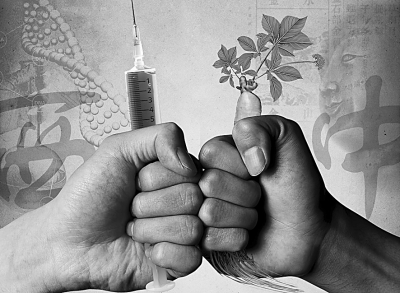
In fact, cancer is not "foreign invasion", and cancer cells are also mutated from normal cells. So, should these "rebellious" cells be exterminated or rehabilitated, so as to realize symbiosis? Academician Tang Zhaoyou, honorary director of the Institute of Liver Cancer of Fudan University, once first proposed "Chinese-style anti-cancer", which is neither pure western medicine nor pure Chinese medicine, but the cooperation, cooperation and complementarity of Chinese and western medicine, which is an integrated medical treatment, and its main strategy is to eliminate and reform simultaneously. The former is more from western medicine, and the latter is more from Chinese medicine, each with its profound cultural background and inside information.
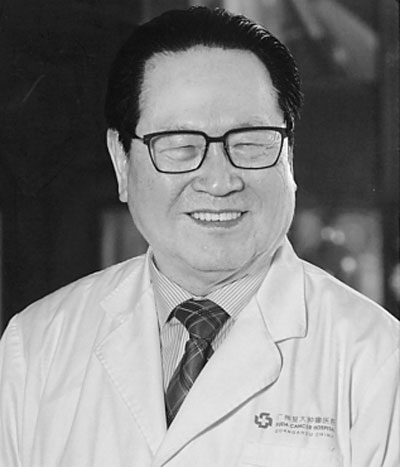
Brief introduction of the author Xu Kecheng is the president of Guangzhou Fuda Cancer Hospital. Over the years, he has been working in the front line of clinical and scientific research, and has made innovative contributions to the early diagnosis of digestive cancer, especially the enzymology of liver diseases and tumor markers. He took the lead in developing tumor cryoablation therapy in China. He also first developed percutaneous cryotherapy for pancreatic cancer and wrote the English version of Modern Tumor Cryotherapy. In 2012, he was awarded the Bethune Medal by the former Ministry of Health, and in 2014, he was awarded the title of "Model of the Times" by Publicity Department of the Communist Party of China.
Bright pictures/vision china
Culture comes from nature, and the connotation of culture has scientific factors and truth. Western medicine and Chinese medicine, born and developed in different countries and different cultural backgrounds, and their respective medical views are all about human life and life-threatening diseases.
1. Chinese and Western medicine bred by different geographical cultures.
Western medicine originated in ancient Greece. Three-quarters of the country is mountainous Greece, surrounded by the sea on three sides, with the Mediterranean Sea in the south, the Aegean Sea in the east, the Ionian Sea in the west and Eurasia in the north. The special natural environment has created an open and extroverted Greek culture.
Most western countries are located in the northern cold zone, and the harsh natural environment is not conducive to farming, which also breeds "expansion" and "invasion", and then derives the cultural quality of "struggle" and "conquest". Based on this culture, the occurrence of diseases is considered as "invasion by foreign enemies", thus giving birth to the western medicine culture with "elimination" as the main strategy.
Traditional Chinese medicine, as a model of oriental culture, originated in the north temperate zone. This area is located in the eastern part of Eurasia, facing the Pacific Ocean in the east, facing the sea on one side, and the land on the other three sides, or blocked by mountains and grasslands. Inside, there is the source of big rivers, and the melting snow in the mountains provides sufficient water. The terrain is flat and the land is fertile and suitable for farming. In addition, the climate with big river conditions is suitable for human survival, forming a relatively closed and conservative thinking, which is in line with the natural rhythm of spring, long summer, autumn harvest and winter storage. This self-sufficient living condition breeds the cultural qualities of "internal defense" and "harmony", and then creates the medical culture of China with this as its basic quality.
2. Differences in thinking culture between Chinese and Western medicine.
Both Chinese and western medicine have experienced the era of gods or witchcraft medical model. This primitive medical development model is the first structured medical system in human history, which created conditions for the birth of ancient medicine to a certain extent.
The emergence and development of real western medicine began in the European Renaissance in the Middle Ages. The philosophical thoughts of "animals are machines" and "people are machines" promote the formation of mechanistic medical model. The development of anatomy, that appearance of microscope and the cytology develope from it have promoted the study of organism and formed a biomedical model. In 1930s, the invention of sulfanilamide, especially the discovery of penicillin by British scientists and its successful application in the treatment of infectious diseases, ushered in the era of "penicillin medicine". Accordingly, surgical technology has advanced by leaps and bounds, and the treatment of diseases by western medicine has reached an unprecedented new height.
Whether it is sterilization, sterilization or surgical removal of lesions, Western medicine basically adopts the "conquest" method to treat diseases. The causes of diseases caused by bacteria, viruses, parasites, etc., together with the pathological changes of tissues and organs such as inflammation, ulceration, degeneration and lumps, are regarded as "conquered" objects. "Etiology treatment" focusing on eliminating the etiology and "disease location treatment" focusing on eliminating the focus have continued to this day and become the main treatment modes of modern medicine.
However, the biggest deficiency of western medicine is that it ignores people’s natural and social attributes. As the famous American medical scientist Engel said, mechanism and pure biomedical model "leave no room for morbid social, psychological and behavioral aspects". In recent years, people have been calling for the discussion of "biological-psychological-social model", but the thinking of "seeing only the trees but not the forest" is still the biggest puzzle in the development of western medicine.
Traditional Chinese medicine has experienced two stages of development: "witch culture" and "harmony between man and nature". Huangdi Neijing, based on the long-term observation and clinical practice of China ancients on life phenomena, laid a foundation for understanding human physiology, pathology and disease diagnosis and treatment, drew a clear line with witch doctors, and promoted the first leap development of Chinese medicine. The treatise on febrile diseases written by Zhang Zhongjing, the "sage of medical sect", is a collection of predecessors’ achievements and the essence of four generations. It integrates theory, method, prescription and medicine in one furnace, which is the first in syndrome differentiation and treatment, and completes the successful transition from theory to practice of traditional Chinese medicine. The above two classic works and their later works have become the ideological basis and cultural heritage of traditional Chinese medicine for a long time.
Traditional Chinese medicine pays attention to the dynamic balance and harmonious development of various contradictions such as disease and health in the process of life. Just as farmers sow, fertilize, harvest and store crops according to the growth law of all things, and obtain the best living condition of crops to ensure the harvest, Chinese medicine regards the whole person as the object of medical activities, not the disease itself. It aims at human survival, weighs the advantages and disadvantages according to people, diseases, times and places, grasps the main contradictions and improvises, thus adopting a "harmonious" treatment strategy to preserve the survival strength.
However, traditional Chinese medicine, which was produced under the background of farming, matured prematurely before it experienced the influence of capitalist industrialization, and it was inevitable that it had traces of farming civilization. Facing the impact of modern western medicine pharmacy, it seems unprepared. Compared with western medicine supported by modern science and technology, it is difficult for Chinese medicine to find a "standard" method defined by modern science, which has become the biggest confusion of its own development.
3. Supporting overall health is the right way.
The treatment of cancer can be said to be a worldwide challenge.
At present, the main problem is that cancer research has fallen into a "cancer culture", which is also a misunderstanding of thinking. Driven by this way of thinking, the pursuit of local tumor removal has become the main goal, rather than the pursuit of a real breakthrough to extend life. The "cancer culture" of western medicine is that the higher the mutation frequency, the more targets and the better the precise treatment effect. In fact, there are many mutations, which just shows that the overall function of the body’s defense mechanism, especially the immune system, is low, allowing more mutations to occur. Therefore, the correct treatment should be to support the overall health and prevent mutation throughout the whole life process.
An American scholar compared the anti-cancer process to war. Countless battles, ammunition and soldiers, blindly implementing the strategy of "annihilation", will not only fail to achieve peace, but will also make the destruction launched by the enemy endless. The correct strategy should be to "transform", transform thinking, transform the system, and restore it to health from top to bottom. The same is true for cancer treatment. Simply "eliminating" can only take care of the moment and lose the long term. "Transformation" is the key to maintain long-term curative effect and make patients survive for a long time. Various measures to strengthen the body’s immunity have been proved to bring survival benefits to patients.
Traditional Chinese medicine is people-oriented, aiming at survival. According to the specific situation of patients, we should either strengthen the body resistance before eliminating evil, or eliminate evil before strengthening the body resistance, or pay equal attention to strengthening the body resistance and eliminating evil, so as to find a modulation scheme for life and let patients coexist with cancer. Here, "transformation" includes transforming cancer cells themselves, transforming the microenvironment in which cancer cells grow, transforming the whole body, strengthening vital functions and protecting overall health. As early as more than 2000 years ago, there were records of "Ruyan", "Tongue carbuncle", "Fuliang" and "accumulation of abdominal mass" in TCM. Almost every accomplished Chinese medicine expert can cite such an example-the application of Chinese medicine has made many cancer patients who have lost hope of survival coexist peacefully with cancer.
In fact, there is no distinction between Chinese and western medicine in the human body, but medicine always has the same root. It is the cultural connotation and connotation of "Chinese anti-cancer" to combine the strategy of "elimination" of western medicine with the strategy of "transformation" of creating and maintaining overall health in China. The cooperation, cooperation and complementarity between Chinese medicine and western medicine may be the way to control and treat cancer.
Extended reading
Fighting cancer requires joint efforts.
At present, cancer prevention and control has become an important public health topic related to the national economy and people’s livelihood.
In October 2016, the State Council released the "Healthy China 2030" Planning Outline, which clearly stated the strategic goal of improving the overall five-year survival rate of cancer by 15% by 2030. At present, the coordinated development of Beijing-Tianjin-Hebei has become a national strategy, and the construction of medical integration is an important part of the Beijing-Tianjin-Hebei strategy. To this end, China Anti-Cancer Association took the lead, and Tianjin Anti-Cancer Association, Beijing Anti-Cancer Association and Hebei Anti-Cancer Association recently signed and issued the "Beijing-Tianjin-Hebei Joint Anti-Cancer Proposal" in Tianjin Cancer Hospital, promising that the three places will promote the construction of medical integration, build a "Beijing-Tianjin-Hebei cancer prevention and control linkage platform" based on their respective industry influence and expert resources, and strive to achieve the prevention and control objectives proposed in the planning outline as soon as possible in Beijing, Tianjin and Hebei.
Academician Hao Xishan, Chairman of China Anti-Cancer Association, pointed out that cancer prevention and control is a systematic project, which needs the participation of the government, social organizations, scientific research institutions, hospitals and enterprises. As long as the whole society join hands, pay attention to cancer and fight cancer scientifically, we will certainly overcome cancer.
Guangming Daily (10th edition, January 21st, 2017)