"Biting the ear and pulling the sleeve, blushing and sweating" is the normal state-one of the thoughts on how to use the "four forms" of supervision and discipline
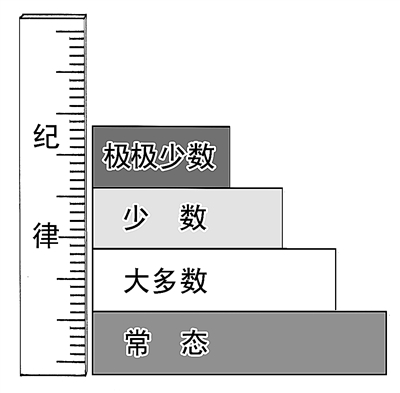
The "four forms" of supervision and discipline, that is, biting one’s ear, pulling one’s sleeves, blushing and sweating become the norm, party discipline and organizational adjustment become the majority, heavy punishment and major job adjustment are a few, and serious violations of discipline are suspected of illegal filing and review. Only a very small number. This is a profound summary of the practical experience of managing the party and the party since the 18th National Congress of the Communist Party of China. It is not only the basic follow-up for the current discipline inspection organs to carry out supervision and accountability, but also an inevitable requirement for party organizations at all levels to strictly manage the party in an all-round way. Under the new situation of strictly administering the party in an all-round way, discipline inspection and supervision organs at all levels put discipline and rules ahead and grasp the "four forms" of supervision and discipline, which is both a task and a working method.
Among the "four forms" of supervision and discipline, "biting the ear and pulling the sleeve, blushing and sweating" not only requires party member cadres to dare to criticize and self-criticize and form the habit of consciously accepting supervision, but also requires party organizations to strengthen supervision, strictly grasp and control, ask questions about minor mistakes and correct minor mistakes.
However, in practice, although the first form can best reflect the prevention of micro-duration, it is often the first form that is most easily overlooked. Many party member’s self-criticism is superficial. There are many objective reasons and few style problems. When analyzing problems, no one sees things, and when criticizing others, it is perfunctory and perfunctory. Why is this happening? Some comrades bluntly said, "criticizing superiors is afraid of being embarrassed, criticizing peers is afraid of hurting people’s feelings, criticizing subordinates is afraid of losing votes, and self-criticism is afraid of losing face."
It should be noted that this kind of supervision and self-supervision that only puts the phenomenon aside, ignores the essence, and is harmonious will only lead to the deviation of the party’s supervision and education. Discipline inspection and supervision organs at all levels must earnestly put discipline and rules ahead and let "biting the ear and pulling the sleeves, blushing and sweating" become the normal state of supervision and education.
Bite your ear and pull your sleeves, be really blushing and sweating, and prevent four bad tendencies.
Despite the strong trend of strictly administering the Party since the 18th National Congress of the Communist Party of China, the relations within the Party have been gradually standardized, and criticism and self-criticism have become powerful weapons to clean up the political dust within the Party. Biting the ear and pulling the sleeves, blushing and sweating have gradually become the norm. However, in the process of conveying and implementing a system layer by layer, sometimes some problems will inevitably appear.
Liberalism, resulting in a lack of party spirit.
Some party member have a weak sense of party spirit and a weak sense of purpose, forgetting party member’s rights and obligations, which makes criticism and self-criticism unable to exert their due effectiveness. Specifically, it is indulgent to the wrong comrades, allowing them to "make up the small holes" and finally it is difficult to return; Criticizing others is not seeking truth from facts, but impure motives and slandering comrades.
Humanism produces the unspeakable thought of "three fears"
Criticism sometimes touches some people’s "sore spots" and "scars", so some party member turns a blind eye to the problems and shortcomings of party organizations or others, knowing that they are wrong. Some party member hold the "three fears" thought of criticizing leaders for being embarrassed, colleagues for losing popularity, and subordinates for losing votes. They don’t offend people from top to bottom, balance things from left to right, and engage in unprincipled bonhomie.
Formalism creates the embarrassment of "great minds think alike"
The democratic life of some party organizations will be reduced to a "perfect drama" rehearsed for many times. Participants are secretive, and their speeches are similar. Most of the problems are words such as "strengthening study" and "raising awareness". These "high-frequency words of problems" have even become "standard terms" when party member cadres write self-analysis materials, which will make the democratic life lose its proper meaning.
Deviation, resulting in collusion with the psychology.
Some party member are not good at solving contradictions and problems with correct methods. They can’t find problems from the root, analyze the causes and discuss the harm. Self-criticism misses the point and criticizes the pain. Individual leading cadres and individual party member are "in the same boat" with the target of criticism, and they have made similar mistakes themselves, or have more problems. They are unwilling to criticize more, and they are even more afraid of setting fire to expose their problems, thus making criticism and self-criticism a mere formality.
Perfect measures, so that biting the ear and pulling the sleeves, blushing and sweating can play their due role.
Without serious inner-party political life, it is difficult to normalize inner-party relations. Supervision and discipline can only be achieved by grasping early and grasping small, and blaming at every turn, so that biting the ear and pulling the sleeves, blushing and sweating really become the norm, and most of the goals can be achieved by discipline.
Normalization of learning and education, so as to enhance party spirit awareness.
Combined with the current "two studies and one doing" study and education, the study of party rules and discipline in party constitution is regarded as an important content of theoretical study of party organizations at all levels; Party organizations and student cadres at all levels should thoroughly implement the "Guidelines" and the "Regulations" and take the form of special counseling, discussion and exchange, and knowledge contests to deepen their studies; Disciplinary committees at all levels have strengthened special inspections on the study and implementation of party rules and regulations in party constitution, helping party member cadres to clarify the boundaries of party discipline and clear the red line of discipline.
The concretization of the main responsibility makes it more effective to bite the ear and pull the sleeve.
The "four forms" of supervision and discipline are not only the requirements for the supervision responsibility of the Disciplinary Committee, but also the requirements for the main responsibility of the Party Committee. The requirements of "two responsibility" should run through all aspects of the Party’s discipline. Supervise and urge all units to organize democratic life meetings in accordance with the provisions of party constitution, carefully check the performance of their duties and duties according to the main responsibility, find out the problems of themselves and the departments, units and personnel in charge according to the new Guidelines and Regulations, and seriously carry out criticism and self-criticism. At the same time, the democratic life society should be problem-oriented, change the rigid status quo by soliciting opinions from both inside and outside the Party and listening to the opinions of the masses on party member cadres, promote democratic life, carry out criticism and self-criticism, grasp the key points and point the acupoints, so as to better improve party member’s style, prevent "corruption" before it happens, and achieve the goals of blushing, sweating and detoxification.
Conversation reminders are regular, making red face sweating the norm.
The "four forms" of supervision and discipline emphasize criticism, education and organization, and it is necessary to further move forward the defense line of discipline and change the situation of being either a "good comrade" or a "prisoner", which reflects the strict requirements and care for party member. In practice, the conversation reminder should be carried out at three levels: pursuing "high standard" conversation, requiring party member to make positive advocacy through heart-to-heart conversation in accordance with the requirements of "Four Necessities" and "Eight Norms" put forward in the Code, guiding and encouraging party member leading cadres to firmly pursue high ideological and moral standards, adhere to political discipline and rules, and consciously play a vanguard and exemplary role; Carry out "patrol-style" talks, and the discipline inspection department will remind you at any time and place from the aspects of politics, ideology, performance of duties, work style, moral quality, honesty and diligence in daily supervision such as regular visits, casing research, attending meetings, and discussion exchanges; To carry out "responsive" interviews, party member cadres who have general comments on the masses, or party member cadres who have reported violations of discipline but have general clues, shall be reminded by the discipline inspection department, or through interviews with responsible comrades of the unit, and be reminded of problems in implementing the main responsibility. Through multi-level talks, party member cadres’ sense of discipline will be strengthened and their ability to perform their duties and duties will be enhanced. In view of the incipient and tendentious problems in party member, we should promptly carry out reminding interviews, so that the conversation can really play its educational function.
Classified interviews, accurate disease prevention and treatment
With the concept of supervision and discipline such as "two responsibility" and "grasping early and grasping small" deeply rooted in people’s hearts, the discipline inspection and supervision organs should be good at widely applying daily supervision means such as criticism and education, admonishing conversations, interviews and letters to the supervision and discipline, and effectively make it the norm to bite the ear and talk. Admonishing conversation can be divided into individual conversation and collective conversation according to the actual work, and the person in charge of the discipline inspection department or the entrusting unit will explain and explain the relevant problems of the interviewee, and solemnly point out the existing problems to them through warning and exhortation, so as to urge them to correct their mistakes within the prescribed time limit. We should be good at solving general problem clues by using conversation letters and inquiries, and ask the interviewees to seek truth from facts for general problems or minor violations of discipline in terms of ideology, work and life style. If the problems are true, they should be given appropriate light punishment or criticism and education; If the questions are not clearly stated in the reply, we will learn more by talking, and promptly follow up and urge the rectification of the problems that should be rectified; Those who refuse to correct or even talk about committing crimes will be dealt with severely.
(Author Chen Dandan Unit: Discipline Inspection Commission of Shengzhou City, Zhejiang Province)