The second anniversary of the Ukrainian crisis, expert: Both sides have adapted to the war situation, but they can’t win or retreat.
BEIJING, Feb. 23 (Xinhua) On the occasion of the second anniversary of the Ukrainian crisis, Qian Feng, a researcher at the National Institute of Strategic Studies in Tsinghua University and a senior researcher at Taihe Think Tank, wrote an article reviewing and looking forward to the crisis. He pointed out that in the past two years, the war situation has remained deadlocked, and its influence has been constantly spilling over. It has extended from military confrontation between the two countries to games between countries and regions in the fields of politics, economy and culture, which has intensified the evolution of the world pattern under the hundred-year change and further promoted the deep adjustment of international strategic forces and patterns.
The full text of the article is as follows:
On February 24, 2022, Russia launched a special military operation against Ukraine, and the Ukrainian crisis escalated. Looking back on the two years since the crisis broke out, the war situation is still deadlocked, and its influence is constantly spilling over. It is not limited to the battlefield military confrontation between the two countries, but also extends to the game between countries and regions in the political, economic and cultural fields, which has intensified the evolution of the world pattern under the century-old changes and further promoted the in-depth adjustment of international strategic forces and patterns.
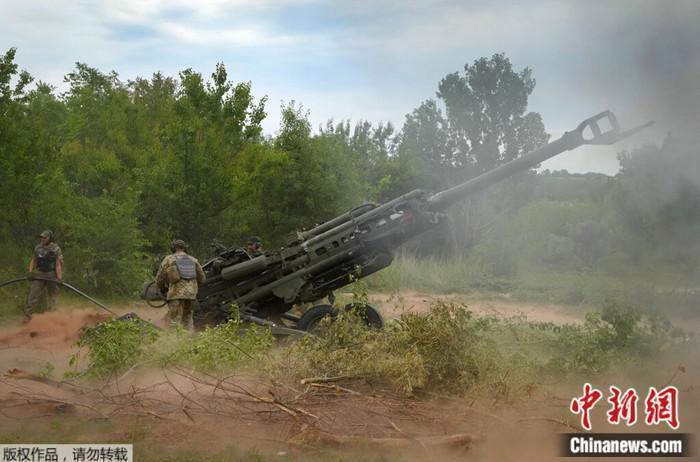
First of all, at the military level, the battlefield situation has changed dramatically, and the battlefield form presented has attracted much attention. In 2022, Russia attacked first and then defended, and Ukraine partially counterattacked. When the two sides saw the move, the battlefield opened wide and the confrontation became increasingly fierce. At the beginning of the operation, Russia carried out a surprise attack on important targets throughout Ukraine, and sent ground troops to carry out in-depth interspersed raids on key cities such as Kiev in four ways, in an effort to defeat Ukraine’s resistance will with blitzkrieg and achieve a quick victory. Although some achievements have been made, the set goals have not been achieved. Ukraine, supported by the continued military assistance from the United States and NATO, began to hold its ground and carry out offensive defense, and recovered large areas such as Kharkov and Hellson through the autumn offensive. Since then, Russia has shrunk its front, mobilized locally, abandoned the goal of the north-south confrontation and encirclement of the Wudong heavy group, gradually pushed it flat on the nearly 1,000-kilometer front, and announced that "the four places in Wudong have invested in Russia", and the war has once again reached a stalemate. On the one hand, in the repeated tug-of-war, the two sides appeared trench warfare similar to that during World War I. On the other hand, the widespread use of civilian satellites, artificial intelligence and unmanned aerial vehicles has greatly rewritten the way of modern warfare.
In 2023, the two sides stabilized the front line and turned to key trials, and the war gradually evolved into a tough competition of lasting consumption. Ukraine mobilized more troops and obtained more military assistance from the United States and NATO. In June, it launched a major counterattack, aiming at advancing the front to the coast of the Azov Sea, retaking the strategic towns of Melitopol and upor, Mali, and cutting off the land transportation line between Russia and the Crimean Peninsula in one fell swoop. Then, it used asymmetric tactics to contain the Russian Black Sea fleet and isolate the Crimean Peninsula by land and sea. However, due to the tight defense of the Russian army, after nearly half a year of counterattack, the Ukrainian army advanced slowly on many fronts in the south, with an average advance of less than 20 kilometers, and the strategic goal of cutting off the Russian supply line was even more out of reach. Due to the protracted war, heavy casualties and low morale, the shortage of Ukrainian troops is very serious. The Russian Defense Minister announced at the State Council in December that the casualties of Ukrainian troops had exceeded 380,000. Although Ukraine has not announced the specific number of casualties, President Zelensky’s statement at the end of 2023 that he would "consider recruiting another 500,000 soldiers" confirms the plight of the Ukrainian army from the side. In 2024, the military confrontation between Russia and Ukraine will not stop. The two countries used missiles and drones to launch air strikes against cities, ports, docks and military facilities in their respective rear areas. This is also the longest and most intensive round of large-scale attacks between the two sides since the outbreak of the crisis in Ukraine in, causing great losses and casualties, which cast a heavy shadow over the already overcast situation in Russia and Ukraine.
Secondly, at the international political level, the Ukrainian crisis is the biggest geopolitical conflict since the end of the Cold War, which has profoundly affected the international security situation and constantly promoted the in-depth adjustment of international strategic forces and patterns. In the past two years, the international security situation has become more and more sharply antagonistic. This crisis has seriously aggravated the group confrontation and camp opposition in international politics. Around the Ukrainian crisis, the principle of consensus among major powers with the United Nations Security Council as the core is facing difficulties, and group confrontation is increasingly replacing mechanism cooperation. The escalation of the Ukrainian crisis has changed the relations between major powers. On the one hand, Russian-European relations, US-Russian relations have broken down, US-European relations have approached, Europe has fallen into a vortex of long-term geopolitical conflicts, Europe’s long-term pursuit of strategic autonomy has suffered obvious setbacks, and its strategic dependence on the United States has deepened. European-Russian economic and trade cooperation has completely broken down and political cooperation has been frozen. Confrontation has replaced cooperation as the main tone of European-Russian relations, and isolation may last for a long time. On the other hand, the United States has not changed its main strategic goal of regarding China as its biggest competitor and containing China. Under the guise of "Today’s Russia and Ukraine will be tomorrow’s Asia", while strengthening the Asia-Pacific bilateral alliance, it has promoted the formation of the "trilateral security partnership" (AUKUS) between the United States, Britain and Australia, brought about a "dramatic improvement" in Japan-ROK relations, strengthened the military alliance system between the United States, Japan and South Korea, and constructed a number of "Indo-Pacific economic frameworks" (IPEF).
Third, on the international security level, the Ukrainian crisis has boosted the global arms race in reverse and increased the risk of high-intensity confrontation among big countries. Stimulated by the Ukrainian issue, major countries in the world have raised their military expenditures one after another, and the degree of militarization has improved significantly. The Institute for International Strategic Studies, a well-known think tank based in London, pointed out in its report on military balance in 2024 that in 2023, global defense expenditure has risen to 2.2 trillion US dollars, with an average increase of 9%. The most prominent is the United States, whose $886 billion defense budget has exceeded the sum of the military expenditures of the next nine countries. In Europe, Germany’s military budget increased by 3.4%, reaching 56.5 billion US dollars; French military spending increased by 7.5% to US$ 49.7 billion; Russia has increased to about 120 billion US dollars. In Asia, South Korea issued the Medium-term National Defense Plan for 2024-2028, and plans to invest about 270 billion US dollars in military expenditure in the next five years. According to the draft government budget adopted by the Cabinet meeting of Japan, Japan’s defense budget in fiscal year 2024 is $55.9 billion, an increase of 16.5% over fiscal year 2023, and a record high.
Fourth, since the escalation of the Ukrainian crisis, the United States and its allies have launched uninterrupted extreme sanctions against Russia, politicizing, instrumentalizing and weaponizing the world economy, undermining international trade rules, increasing risks in the international debt and financial fields, and causing a huge impact on international food prices and energy prices, making the "obstruction" of the global supply chain more serious, causing the supply chain of some industrial chains to break, and setting more obstacles for the world economy in a difficult recovery. In this geo-economic shock, the pattern of the three poles of the world economy has changed, the weight of the European pole has been reduced, and the European economy has suffered multiple shocks. Affected by the anti-bite effect of EU sanctions against Russia, European energy prices have soared, inflation has been high, enterprises have suffered huge losses, people’s real wages have shrunk seriously, and purchasing power has declined. The global economic center of gravity is further tilted to the Asia-Pacific region. The refusal of developing countries to follow the United States and the West to sanction Russia also shows that the "global South" has increased its economic autonomy and ability. Actions against American economic hegemony, including "dollarization", are increasing day by day.
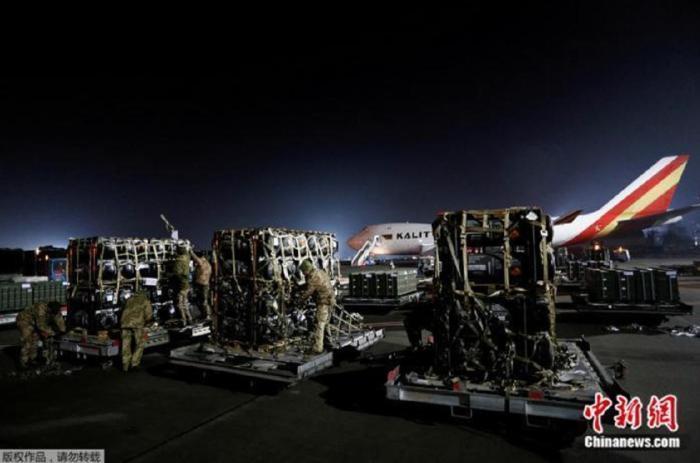
It has been two years since the outbreak of the Ukrainian crisis, and the feeling of war-weariness and peace is fermenting around the world. At present, there are only sporadic dawns of peace, and no obvious signs of easing the situation have been seen. Russia and Ukraine have gradually adapted to the situation. Russia has gradually turned into a wartime system, and various economic indicators have rebounded. The military industry has fully supplied the front line, and the follow-up troops have also been continuously replenished. Although Ukraine has entered a comprehensive defensive posture, the domestic people who do not accept negotiations and insist on continuing to fight still account for the majority. Although the support of the United States and the West to Ukraine has declined due to domestic political struggles and the conflict in Gaza, it will not stop due to ideological and geopolitical factors. The European Union recently passed 50 billion euros in aid to Ukraine, and Biden is also pushing for a new aid bill to Ukraine. American and Western aid to Ukrainian F-16 and other equipment will soon be in place. From this point of view, the Ukrainian crisis will continue in 2024. In the future, this crisis may experience a long process of alternating hot and cold, sometimes slow and sometimes urgent. Both sides are faced with the embarrassing situation that they can’t win, can’t talk properly, and can’t retreat. The conflict goal is also alienated into letting the opponent shed more blood and bear greater losses, consuming the other side’s resources to the maximum extent, and forcing the other side to retreat in the competition between ambition and resilience. It remains to be seen whether the result of the US presidential election at the end of 2024 will bring positive changes to the final cease-fire and cease-fire of this cruel crisis.
China is not a party to the Ukrainian crisis, and China has always insisted on resolving differences and disputes by peaceful means through dialogue and consultation. China adheres to the principle of "non-alignment, non-confrontation and non-targeting against third parties" towards Russia, and also maintains communication with Ukraine. China’s position does not depend on the closeness of their relationship, but on the merits of the matter itself. China has always opposed the Cold War mentality and bloc confrontation, and advocated properly respecting and responding to the legitimate security interests and concerns of all countries. Facts have proved that mankind is an inseparable security community. Only by adhering to the common, comprehensive, cooperative and sustainable security concept, firmly safeguarding the international system with the United Nations as the core and the basic norms of international relations based on the purposes and principles of the UN Charter, can we build a balanced, effective and sustainable global and regional security architecture and make this war-torn world peaceful, prosperous and beautiful. (The author of this article is jointly invited by China News Network and Tencent News)